

Best Name Labels for School NZ: The 2026 Parent’s Buying Guide
How many times have you reached into the dishwasher only to find a soggy, half-peeled sticker stuck to the bottom? It's a frustrating ritual for Kiwi parents every single term. If you're searching for the best name labels for school NZ, you're likely tired of names fading by April and stickers that look messy with clear, sticky borders. You want your kids' gear to stay organised without the constant need for replacements.
We agree that school supplies are a significant investment. It's only natural to want labels that reflect that quality and actually stay put. This guide will help you discover how to choose durable, stylish name labels that survive the NZ school year without peeling or fading. We'll explore why the modern, raised look is replacing traditional stickers and how the right application makes all the difference. Get ready to see how premium UV DTF technology provides a clean, no-background finish that looks like it was professionally printed on. From drink bottles to lunchboxes, we'll ensure your 2026 school prep is sorted for the long haul.
Key Takeaways
- Learn why UV DTF technology offers a premium, "printed-on" look without the messy clear backgrounds found on traditional stickers.
- Discover how to ensure your decals last the full year by understanding the factors that affect durability, such as surface preparation and curing time.
- Save money and avoid the lost property bin by choosing the best name labels for school NZ that stay firmly attached to lunchboxes and drink bottles.
- Find out how to efficiently organise the whole family at once using Sibling Packs designed for busy multi-child households.
- Master the simple application steps required to achieve a smooth, bubble-free finish that stands up to the rigours of daily school life.
Finding the Best Name Labels for School in NZ: What Really Matters?
Every Kiwi parent knows the sinking feeling of checking the "Lost Property" bin on a Friday afternoon. It's a chaotic pile of unclaimed hoodies, lonely shoes, and expensive lunchboxes. Without clear identification, that brand-new stainless steel drink bottle you bought in January is as good as gone. Replacing these items isn't cheap. With a quality lunchbox often costing upwards of NZ$20 and insulated bottles even more, the "tax" on lost gear adds up quickly over a single school year.
When looking for the best name labels for school NZ, most parents start with price. However, the real value lies in durability, aesthetic appeal, and how easy they are to apply. Traditional paper stickers or cheap vinyl alternatives often fail by the time Term 2 rolls around. They start to curl at the edges, trapping dirt and eventually peeling off entirely. This leaves behind a sticky residue and an anonymous item that's bound for the lost property pile. Choosing the best name labels for school NZ means looking beyond the basic sticker sheet and considering how the label is actually made.
The NZ School Environment vs. Your Labels
Our local conditions are tough on stationery and gear. During a typical New Zealand summer, school bags often sit in the afternoon sun; this can cause temperatures to rise enough to soften the adhesive on low-quality stickers. Then there's the daily "dishwasher test." Most families rely on high-temperature cycles to keep lunchboxes hygienic. If a label isn't designed to handle that heat and moisture, it won't last the month.
We also need to consider abrasive play. Labels on scooters, bikes, and helmets take a beating. Whether it's being tossed on the grass at lunchtime or scraped against a bag rack, your labels need extra grit. This is where the Direct-to-film (DTF) printing process, specifically the UV-cured version, offers a significant advantage over standard stickers. It creates a bond that's far more resilient to the scrapes and bumps of school life.
Aesthetic Trends in School Personalisation
The days of clunky, rectangular stickers with messy clear borders are fading. Today's trend is all about seamless branding. Older students, in particular, prefer minimalist designs that look like they were part of the original product. A "no-background" finish is now the gold standard for premium school gear. It provides a clean, 3D-like raised effect that feels smooth to the touch. It’s about more than just a name; it’s about a professional look that kids actually feel proud to show off. Investing in quality ensures that your child's personality shines through while keeping their belongings safe and identifiable.
Why UV DTF is the Premium Choice for School Gear
If you've ever looked at a high-end, custom-branded drink bottle and wondered how the logo looks so perfectly "printed on," you've likely seen UV DTF technology in action. While many parents settle for standard vinyl stickers, those looking for the best name labels for school NZ are increasingly turning to these premium transfers. UV DTF isn't your average school sticker. It's a sophisticated transfer process where the design is printed directly onto a film and then cured with ultraviolet light. This results in a label that doesn't just sit on top of the surface; it feels integrated with the item itself.
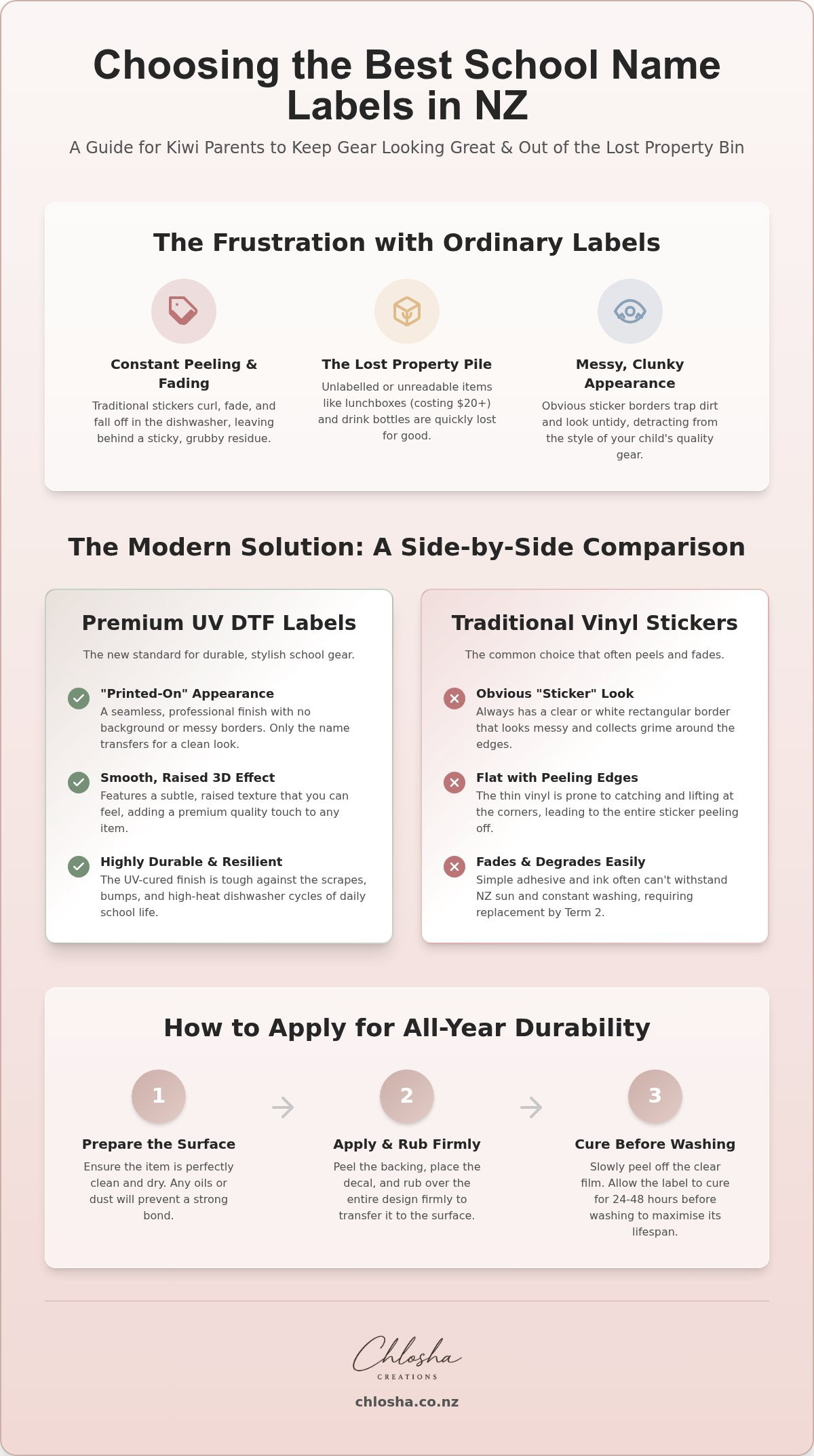
The standout feature is the "no-background" advantage. Traditional stickers always have a border, whether it's white, clear, or coloured. This border is often where the trouble starts; it's the first place to catch on a bag or lift during a wash. With UV DTF, only the name and any chosen icons are transferred. This creates a clean, professional look that mimics a factory-printed finish. The result is a slightly raised, 3D effect that you can feel with your fingertips. It adds a touch of luxury to everyday school supplies.
The Science of the Transfer
The durability of these transfers comes down to the UV curing process. When the ink is exposed to ultraviolet light during production, it undergoes a chemical reaction that toughens the finish. This creates a resilient bond that's quite different from the simple adhesive used on paper or vinyl stickers. While the NZ Care Labelling Standards primarily govern textiles, the underlying need for durable, clear identification applies to all school gear. A label that stays vibrant and legible after months of UV exposure and daily handling is essential for keeping gear out of the lost property bin.
Because there's no background film to worry about, the risk of peeling corners is significantly reduced. The ink bonds specifically to the surface of your lunchboxes and drink bottles. This makes it much harder for little fingers to pick at the edges, which is a common cause of label failure with traditional products.
Visual Comparison: Transfer vs. Sticker
On materials like glass or hard plastic, the difference is striking. A traditional sticker often looks like an afterthought, with its visible edges and potential for air bubbles. In contrast, a UV DTF transfer looks smooth and integrated. The lack of a border makes the names "pop" against colourful gear, ensuring they're easy for teachers and students to read. This subtle, high-quality look is particularly popular with high-schoolers who might find bright, chunky stickers a bit too "kiddy." You can explore our full range of personalised name labels to see how these designs can elevate your child's school kit for the coming year.
UV DTF vs. Traditional Vinyl: Which School Labels Last?
Kiwi parents put a lot of thought into choosing the right gear for the new year. According to the Ministry of Education guidelines on school costs, items like stationery and uniforms are the responsibility of the family. This makes high-quality labelling a practical insurance policy for your wallet. While traditional vinyl stickers are a common sight, we often get asked why we prefer UV DTF. The answer lies in how these labels handle the daily grind of a New Zealand classroom.
Vinyl stickers rely on a layer of adhesive backed by a plastic film. They are a solid choice for many, but they have a physical edge that can catch on bag linings or be picked at by bored fingers. Chlosha Creations chooses UV DTF because it removes that "sticker" profile entirely. By using a bonded transfer, you get a finish that's much harder to shift. When you're looking for the best name labels for school NZ, you want something that won't require a mid-year replacement because the corners have started to yellow and curl.
The Durability Breakdown
UV DTF is remarkably resilient to daily wear. Inside a school bag, items are constantly rubbing together. These transfers are designed to resist scratching from rulers, pencil cases, and heavy textbooks. They also handle the transition from a cold fridge to a sunny playground without the adhesive becoming brittle or losing its grip. The secret to this bond is curing time. We recommend leaving the label for 24 to 48 hours before the first wash. This allows the bond to fully set against the surface, ensuring it stays put through countless lunch breaks.
Which Surface Wins?
Not all surfaces are created equal. To get the most out of the best name labels for school NZ, you need to match the label to the material. Stainless steel is king. Drink bottles from brands like MontiiCo or Bento provide an excellent, high-energy surface for a strong bond. Hard plastic lunchboxes and snack containers also perform very well, provided they are smooth and clean.
- Best results: Stainless steel, glass, and smooth, hard plastics.
- Surfaces to avoid: Silicone and "soft-touch" plastics. These materials often have a slightly oily or textured finish that prevents the transfer from bonding correctly.
- Textured gear: If a lunchbox has a heavy grain or fabric-like texture, any label will struggle to find a flat spot to grip.
By choosing the right surface and allowing for proper curing, you can ensure your personalised name labels stay looking professional and integrated for the long haul.
Selecting the Right Label Pack for Your Child’s Gear
Choosing the best name labels for school NZ often comes down to matching the right size to the right item. It's not just about getting a name on a bottle. It's about making sure that name is visible, appropriate, and durable for the specific surface. A label that's too large for a pencil will eventually lift; one that's too small for a scooter might be missed in the lost property pile. Getting the proportions right is the first step toward a stress-free school year.
The All-Rounders: Classic and Mega Packs
Our Classic packs are the workhorses of the school bag. These are perfectly sized for the flat surfaces of lunchboxes and medium-sized drink bottles. Because UV DTF transfers have no background, they blend into the container, looking like they were always there. It's a clean, modern aesthetic that parents love. For items that need more impact, the Mega packs are the answer. These are designed for high-visibility gear that often goes missing during sports days or at the school gate. Think about scooters, bikes, and helmets. These larger decals ensure that even from a distance, there's no mistaking who the owner is. You can browse our Classic Name Packs to find the right fit for your daily essentials.
Managing multiple children can be a logistical challenge. Sibling Packs are a practical solution for busy Auckland families. Instead of ordering separate sheets for every child, you can organise the whole family in one go. This saves time and ensures everyone is ready for Term 1. For younger children in kindy or early primary, Icon + Name packs provide a significant psychological benefit. Even if a child hasn't mastered reading their name yet, they can easily recognise their favourite dinosaur or star. It builds a sense of ownership, helping them identify their gear in a crowded cubby or classroom.
The Specialists: Slim, Mini, and Icon Packs
Stationery presents its own set of challenges. A standard sticker is difficult to wrap around a narrow pencil without it eventually uncurling. Our Slim and Mini transfers are designed specifically for these tiny items. They bond tightly to pens, pencils, and rulers. It's often the small things that disappear first, so having a dedicated size for them is a smart move. These smaller transfers maintain the same "printed-on" look as our larger decals, keeping even the pencil case looking sharp.
Personalisation should be fun. Choosing icons that reflect your child’s personality makes the labelling process an exciting part of the back-to-school ritual. Whether they're into bright animals or minimalist shapes, there's a design that fits. You can explore themed Icon + Name Packs to find a style that matches your child's personality. By selecting the right size for each piece of equipment, you ensure the best name labels for school NZ stay put and do their job. Ready to get started? View our full range of personalised name labels to find the perfect pack for your family's needs.
Applying Your Name Labels for Maximum School-Year Durability
Getting your gear ready for Term 1 is a big task. You've invested in quality gear and the best name labels for school NZ families can find. Now, the final step is ensuring they stay put. The longevity of any transfer depends heavily on the surface and the application process. It's not just a matter of "peel and stick" if you want them to survive the daily cycle of school life. Following a few simple steps will ensure a professional, integrated look that lasts.
The golden rule is simple: only apply to clean, dry, and smooth surfaces. Any dust, oil, or leftover residue from manufacturing can prevent the UV DTF from bonding correctly. This is especially true for modern lunchboxes made from "low-surface-energy" plastics, which are designed to be non-stick. If you're dealing with a particularly stubborn surface, a quick blast with a hair dryer on a low setting can help. Warming the surface slightly before application helps the bond take hold more effectively.
The 3-Step Application Process
Preparation is everything. Start by giving the area a quick wipe with a damp cloth or a bit of rubbing alcohol to remove finger oils. Once the surface is bone dry, it's time for positioning. We suggest a "measure twice, stick once" philosophy. Because these transfers bond so well, they aren't easy to reposition once they've made contact. Take your time to line everything up straight.
- Preparation: Clear away all dust and oils.
- Positioning: Place the transfer firmly, starting from the centre and working outwards to avoid bubbles.
- The Peel: This is the most important part. Remove the clear carrier sheet by pulling it back slowly at a very low angle, keeping it almost flat against the surface.
After application, the most critical step is the curing period. We recommend a 72-hour "no-wash" window. While it's tempting to test them out immediately, giving the bond three full days to set ensures the best possible result. This is a much safer approach than the basic instructions offered by many standard sticker companies.
Long-Term Care and Maintenance
Once cured, your personalised name labels are ready for action. To keep them looking sharp, always place labelled drink bottles and lunchboxes on the top rack of the dishwasher. Use moderate temperature settings rather than the intensive "pots and pans" cycle. High heat can eventually degrade even the toughest bonds over time.
Avoid using harsh chemicals or abrasive "greenie" sponges directly over the name. A soft cloth and standard dish soap are all you need. If you notice an edge finally starting to lift after a year of heavy use, it might be time to refresh your labels. Keeping an eye on your gear ensures that names stay legible and items stay out of the lost property bin. Ready to get organised? Check out our best sellers to see which designs other Kiwi parents are loving this season.
Get Sorted for the 2026 School Year
Keeping track of lunchboxes and drink bottles doesn't have to be a full-time job. By choosing UV DTF technology, you're opting for a premium, no-background finish that looks like it is part of the gear. We've seen how these transfers outlast traditional vinyl by bonding directly to the surface, especially when you follow the 72-hour curing rule. It's about more than just a name; it's about protecting your investment in quality school supplies.
As a family-run Auckland business, Chlosha Creations is here to help you stay organised with the best name labels for school NZ. Our premium transfers provide that smooth, raised effect that kids love and parents trust. If you're local, we even offer Auckland pickup to make your back-to-school prep even easier.
Shop the best name labels for school gear in NZ and get ahead of the Term 1 rush. We can't wait to help you create something special that lasts the whole year through!
Frequently Asked Questions
Are these school name labels truly dishwasher safe?
Durability depends entirely on the surface type and how well the label is applied. While our UV DTF transfers are highly resilient, we don't claim they are permanently dishwasher-proof. For the best results, always allow a 72-hour curing window before the first wash. Placing items on the top rack and avoiding intensive high-heat cycles will help maintain the finish throughout the school year.
Will UV DTF labels work on my child’s silicone lunchbox?
No, UV DTF transfers won't bond effectively to silicone or "soft-touch" textured plastics. These materials have low surface energy, which prevents the transfer from creating a secure grip. Our labels perform best on smooth, hard surfaces like stainless steel drink bottles and standard BPA-free plastic lunchboxes. Always check the texture of your gear before choosing your placement for a long-lasting bond.
How long do Chlosha Creations name labels take to arrive in NZ?
We are a family-run business based in Auckland, so your order doesn't have to cross any oceans to reach you. Processing times can vary, especially during the busy January back-to-school season. We provide national shipping across New Zealand and also offer a local Auckland pickup option. This is a great way to save on shipping costs and get your gear organised faster.
Can I use these labels for school clothing or hats?
Our transfers are designed specifically for hard surfaces and won't work on textiles. We don't sell iron-on, sew-on, or fabric labels. If you're looking for the best name labels for school NZ gear like drink bottles, scooters, and helmets, our UV DTF decals are the perfect choice. For uniforms and hats, you'll need to look for a dedicated fabric labelling solution elsewhere.
What is the difference between a name label and a UV DTF decal?
A UV DTF decal provides a premium, "no-background" finish that standard stickers simply can't match. Traditional labels often have a clear or white border that can trap dirt and lift over time. Our transfers look like they were custom-printed directly onto the item. They feature a slightly raised, 3D feel that feels smooth and integrated, offering a modern look for all your school supplies.
What should I do if my label starts to lift at the edge?
Lifting is usually caused by invisible oils or dust trapped during application. If you notice a corner coming up, you can try warming it slightly with a hair dryer on a low setting and pressing it back down firmly. To prevent this, always ensure the surface is cleaned with a quick wipe and is bone dry before you apply your personalised name labels for the first time.
Are there specific fonts that are easier for kids to read?
Clean, bold, sans-serif fonts are the best choice for young students, especially those in kindy or early primary. These styles mimic the lettering kids are learning in the classroom, making it easier for them to identify their own lunchboxes. We offer a variety of modern, clear fonts that ensure your child's name stands out while still looking stylish and professional on their gear.
Can I get a mix of names in one pack for my children?
Yes, our Sibling Packs are the most practical way to organise a multi-child household in one go. These packs allow you to get the best name labels for school NZ without the need to purchase separate sheets for every individual child. It's an efficient solution for busy parents who want to ensure everyone's drink bottles and lunchboxes are clearly marked before the first term begins.
