

Dishwasher Safe Name Labels: 2026 Parents' Buying Guide
You pull a fresh load out of the dishwasher only to find your child's favourite drink bottle looking like a sticky mess. The label you carefully applied last month is now peeling at the corners, and the name has faded into an unreadable blur. It's a common frustration for Kiwi parents who just want a simple way to keep track of school and kindy gear without constant maintenance. Finding genuine dishwasher safe name labels for kids shouldn't feel like a gamble every time you press the start button on your appliance.
We understand that you want a "set and forget" solution that actually lasts through the rigours of daily cleaning. This 2026 buying guide will show you how to choose labels that stay put through hundreds of cycles while maintaining a sleek, "printed-on" look. We'll explore the durability of modern UV DTF technology, explain why some stickers fail, and provide the exact steps to ensure your labels look professional for the long haul. By the end of this guide, you'll know exactly how to protect your investment in lunchboxes and bottles with a finish that won't budge.
Key Takeaways
- Understand the difference between traditional stickers and UV DTF technology, which provides a more durable, heat-resistant finish for your gear.
- Learn the essential cleaning and curing steps to ensure your dishwasher safe name labels for kids stay firmly attached to lunchboxes and drink bottles.
- Discover the "no-background" advantage that gives your children's items a clean, professional look as if the name were printed directly onto the surface.
- Identify the right labels for your needs, from the Classic Name Pack for everyday items to the Mega Name Pack for larger sports equipment and helmets.
- Support Chlosha Creations, an Australian family business, and receive premium quality transfers that outlast mass-market alternatives.
What Makes a Name Label Truly Dishwasher Safe?
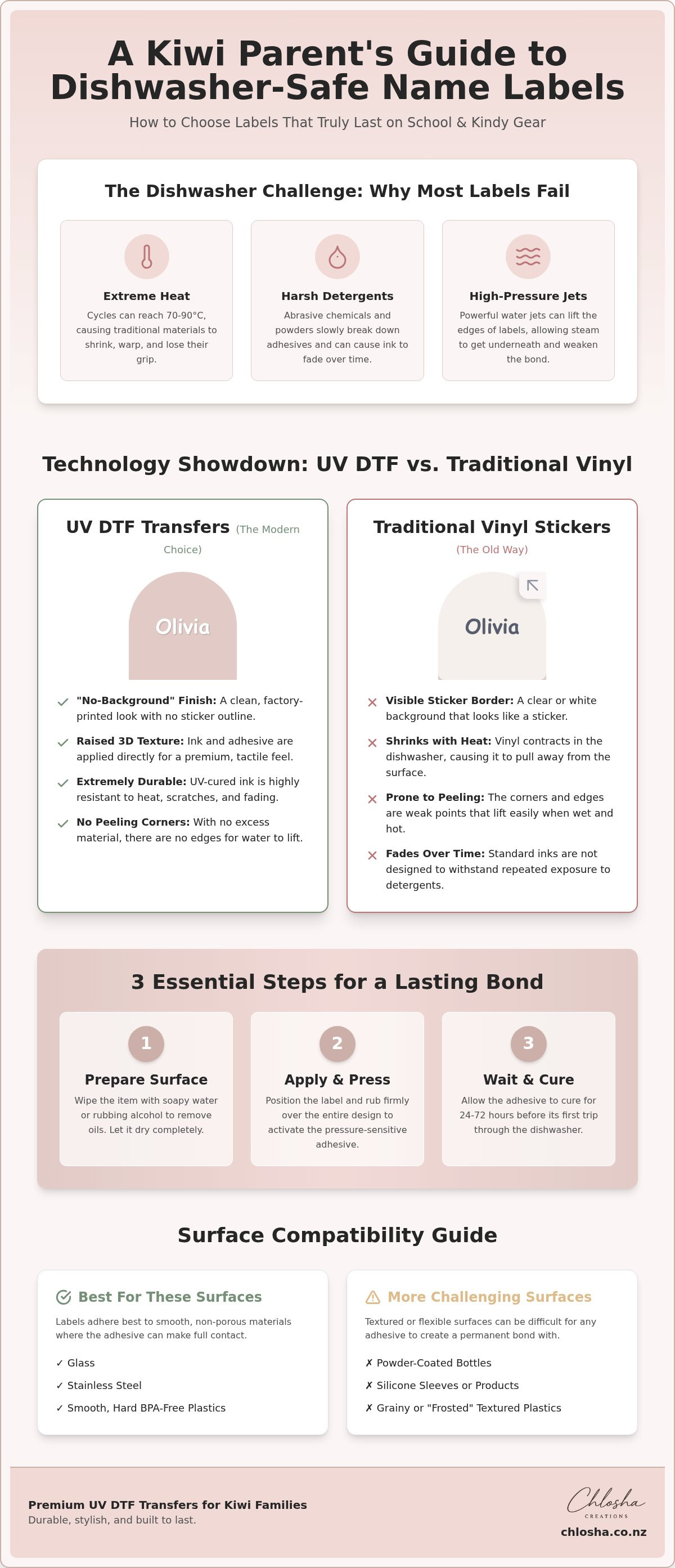
A dishwasher is a harsh environment for any sticker. Between the high-heat drying cycles and the abrasive chemicals in modern detergents, it's a wonder anything survives. When we talk about dishwasher safe name labels for kids, we are looking for a product that balances two critical factors: material durability and adhesive strength. Most high-quality labels rely on pressure-sensitive adhesives to create a lasting bond. This bond needs time to cure; usually 24 to 72 hours; before it can handle the intense steam and water pressure of a standard Kiwi kitchen appliance.
It's important to understand the difference between "dishwasher resistant" and "indestructible." Even the best labels have limits. Factors like water temperature, which can reach 70-90°C in some machines, and your choice of detergent play a massive role in longevity. Labels usually fail because steam penetrates the edges or abrasive cleaners slowly eat away at the bond. Proper preparation and choosing the right technology are your best defences against the dreaded peeling corner.
The Problem with Traditional Vinyl Stickers
Standard vinyl stickers often struggle because heat causes the material to contract. As the vinyl shrinks, it pulls away from the adhesive at the edges. This leads to that annoying peeling corner that eventually catches on everything. You might also notice a fuzzy white border appearing around the name. This happens when the top layer of the sticker begins to delaminate under stress. While many brands claim their stickers are waterproof, that usually just means the ink won't run when it gets wet. It doesn't mean the label can survive the extreme conditions of a heavy-duty wash cycle.
Surface Compatibility: Where Labels Stick Best
For a label to stay put, the surface needs to be your friend. Smooth, non-porous materials like glass, stainless steel, and hard BPA-free plastics are ideal. If you are applying personalised name labels for school, check the texture of the lunchbox first. Slightly grainy or "frosted" plastics provide less surface area for the adhesive to grab onto. Powder-coated bottles and silicone sleeves are notoriously difficult for standard adhesives to grip. The most common reason for failure isn't the label itself, but invisible oils from your hands or leftover dish soap on the bottle. A quick wipe with warm soapy water or rubbing alcohol before application can make all the difference for a long-lasting bond.
UV DTF vs. Vinyl: Choosing the Best Technology
Most parents are familiar with traditional vinyl stickers. They've been the standard for years, but as we move into 2026, a superior technology has taken the lead. UV DTF (Direct-to-Film) transfers offer a level of durability and finish that vinyl simply cannot match. Unlike a standard sticker, which is a piece of printed plastic with a sticky back, a UV DTF transfer applies the ink and adhesive directly to your item. This results in a slightly raised, 3D texture that feels like a professional, high-end print. It's a significant step up for anyone looking for dishwasher safe name labels for kids that actually last.
The life expectancy of these transfers is notably higher than standard stickers. While vinyl is prone to shrinking and fading, UV DTF is built for the long haul. The ink is cured using ultraviolet light during the printing process, making it incredibly tough. If you're tired of replacing labels every term, switching to this modern technology is a practical investment for your family's school gear. You can see the difference for yourself by exploring our latest personalised name labels designed for Kiwi families.
Why "No-Background" Matters for School Gear
One of the biggest advantages of UV DTF is the "no-background" finish. When you apply the label, only the name and the icon remain on the bottle or lunchbox. There is no clear or white rectangular border surrounding the text. This gives your child's gear a sleek, custom look as if the name were printed directly onto the surface at the factory. It looks stylish and clean, regardless of the colour of the item.
Beyond aesthetics, this lack of background serves a functional purpose. Without a large plastic surface area, there are fewer edges for water and detergent to catch onto. Traditional stickers often start to fail at the corners. By removing that extra material, we significantly reduce the risk of peeling. Whether it's a bright pink drink bottle or a dark navy lunchbox, the name stands out clearly without the "sticker" look.
The Durability Factor: Heat and Scratches
UV-cured ink is remarkably resilient. It's designed to withstand the high temperatures of a dishwasher cycle without losing its vibrancy. While cheap stickers might look dull after a few washes, these transfers keep their colour. This is especially important for school gear that faces daily use. These labels are also scratch-resistant, which is a lifesaver when lunchboxes are being shoved into packed school bags or dropped on the playground.
Because the bond is so strong, these transfers handle the expansion and contraction of plastic during heat cycles far better than vinyl. To get the most out of your labels, it helps to understand the full range of options available. You can find more detail in The Ultimate Guide to Personalised Name Labels in NZ. This guide explains how different materials react to daily wear and tear, helping you make the best choice for your busy household.
Finding Your Perfect Pack: A Buying Guide
Every family has different needs. Some are just starting the kindy journey, while others are managing a household of three school-aged kids. Choosing the right dishwasher safe name labels for kids depends on what you're labelling. Our Classic Name Pack is the versatile choice for most daily items. It's the perfect size for standard drink bottles and lunchboxes. If you need something for larger gear, the Mega Name Pack offers better visibility for items like cricket bats, helmets, or scooter frames.
Don't forget the small stuff. Slim and Mini labels are designed for thin items like pens, rulers, and even the handles of cutlery. If you have multiple children, a Sibling Pack is a smart way to get everyone organised in one go without buying separate full sets. This allows you to split a pack between children while still getting the premium UV DTF quality that stands up to daily use.
Labelling for Kindy and Daycare
At kindy, things get messy and items are often shared. Dummies and bottles need frequent sanitising in high-heat cycles to keep things hygienic. Using Icon + Name Packs is a brilliant way to help pre-reading kids recognise their own gear. They might not be able to read their name yet, but they'll quickly learn that the blue dinosaur or the yellow sun belongs to them. Allergy alert labels are also essential in these environments. They provide a clear, visual reminder to teachers and carers about specific dietary needs during shared snack times.
School Gear and Stationery Essentials
Once the school years start, the list of items to label grows significantly. You'll need durable transfers for everything from lunchboxes to glue sticks and rulers. For stationery, our mini labels fit perfectly on the curved surfaces of pens and pencils, ensuring they don't end up in the "lost property" bin. Sports gear is another high-use category that benefits from a professional finish. Whether it's a hockey stick or a water bottle for the sidelines, these transfers handle the rough and tumble of the playground with ease. You can shop our name labels collection to find the exact size and style that fits your child's personality.
Application Tips for Maximum Dishwasher Resistance
Getting your labels to stay put through endless wash cycles isn't just about the quality of the transfer. It's about the bond you create during those first few minutes. To ensure your dishwasher safe name labels for kids perform as promised, you must follow a methodical process. Start by deep cleaning the surface. Rubbing alcohol is the gold standard, but warm soapy water works well too. You need to remove every trace of oil, grease, or old food residue. Even invisible fingerprints can compromise the adhesive. Once cleaned, dry the item completely. Any trapped moisture is the enemy of a long-term bond.
When you're ready to apply the transfer, don't just use your thumb. Pressure is your best friend here. Grab a credit card or a small squeegee and press firmly from the centre outward. This action activates the adhesive and pushes out any micro-bubbles that might later expand in the heat of the dishwasher. Finally, the most critical step is the curing phase. While the label might look perfectly stuck immediately, the chemistry needs time to settle. Wait at least 24 hours before handling the item for school and a full 72 hours before it goes anywhere near a dishwasher.
The 72-Hour Rule: Why Patience Pays Off
Why the long wait? During the first three days, the adhesive molecules are slowly flowing into the microscopic grooves of the plastic or metal surface. Prematurely exposing the label to high-heat steam or harsh detergents is the most common cause of failure. If you've left labelling until the night before school starts, don't panic. Apply the labels as usual, but just give the drink bottles and lunchboxes a quick, gentle wipe-down by hand for the first few days. This small bit of patience ensures the labels won't budge for the rest of the year.
Troubleshooting Common Application Issues
Are you struggling with air bubbles? Try the "low angle" peel technique. Instead of pulling the carrier sheet straight up, peel it back flat against the surface of the bottle. If you're labelling a highly curved surface, a warm hair dryer can help. A few seconds of gentle heat softens the transfer, allowing it to mould perfectly to the shape without creasing. Just remember that some surfaces simply aren't suitable. Avoid silicone, fabric, or "low-energy" plastics with a heavy, grainy texture. These materials are designed to be non-stick, meaning no adhesive can gain a permanent foothold.
Ready to get your school gear sorted? You can find our full range of durable designs and order your personalised name labels today to ensure everything makes it back home in one piece.
Why Kiwi Families Trust Chlosha Creations
Choosing a brand for your family's needs is about more than just finding a product. It's about finding a partner who understands the daily juggle. Chlosha Creations is a family-run business based in Auckland, and we take pride in every single order that leaves our workshop. Unlike large, mass-produced labels from overseas corporations, we focus on a personalised touch and high standards of craftsmanship. We want your gear to look stylish and stay organised, which is why we've invested in premium UV DTF technology.
Our dishwasher safe name labels for kids are designed to outperform the standard stickers you find in big-box stores. Because we use a raised, no-background finish, your labels won't just sit on top of a bottle; they look like they were printed there. This attention to detail means you get a professional result every time. We are parents too, so we know that durability is non-negotiable when it comes to school and kindy gear. We treat every pack with the same care we'd use for our own children's things.
A Modern Look for Organised Households
The beauty of our no-background finish is its versatility. While they are perfect for the playground, these labels also elevate the look of your home storage. Imagine your pantry containers or bathroom organisers with clean, sleek names that don't have a messy sticker border. It's an easy way to bring a sense of calm and order to your living spaces. If you're looking for some creative ideas on how to use them, check out our Best Sellers for inspiration. From personalised gifts to home organisation, the possibilities go far beyond the lunchbox.
Ready to Organise Your Gear?
We've made the ordering process as simple as possible. You can browse our designs online and customise your labels in just a few clicks. We offer fast delivery across all of New Zealand, from Cape Reinga to the Bluff. For those living locally in Auckland, we even provide a pickup option to save on shipping costs. We are here to help you get sorted for the new term or finally tackle that pantry project you've been putting off. Explore our range of dishwasher safe name labels and discover the difference that a local, quality-focused business can make for your home.
Ready for a Stress-Free School Year?
Getting your kids ready for school or kindy shouldn't involve a constant battle with peeling stickers and faded names. By choosing UV DTF transfers over traditional vinyl, you're investing in a durable solution that looks like a professional print. Remember that the secret to success lies in the preparation; a clean surface and that critical 72-hour curing time make all the difference for dishwasher safe name labels for kids. It's the simplest way to ensure your hard work doesn't wash away in the first cycle.
At Chlosha Creations, we take pride in being a family-run business based right here in Auckland. Our premium "no-background" finish ensures your drink bottles and lunchboxes stay looking sleek while remaining easy to identify. We're here to help you get organised with NZ-wide shipping and convenient local pickup options available. Stop worrying about the next dishwasher load and start enjoying gear that stays labelled for the long haul. Shop our durable, dishwasher safe name labels here and get your household sorted today.
Frequently Asked Questions
Can I put my labelled drink bottles in the dishwasher?
Yes, you certainly can. Our transfers are designed to handle the heat and water pressure of standard home dishwashers. While hand washing is always the gentlest option for any personalised item, these labels are built for the daily reality of busy Kiwi households. Just make sure you avoid using heavy-duty commercial cycles or extremely high-heat sanitising settings, as these can eventually stress the bond over many months.
How long do I need to wait before washing my labels?
You should wait at least 24 hours for light handling and a full 72 hours before the first dishwasher cycle. This curing period is the most important part of the process. It gives the adhesive enough time to flow into the microscopic texture of the surface and set firmly. Washing the item too early is the most common reason labels fail, so a little patience goes a long way.
What is the difference between UV DTF and vinyl stickers?
UV DTF transfers use ultraviolet-cured ink that is applied directly to your item, whereas vinyl stickers are printed on a film with a sticky backing. This modern technology creates dishwasher safe name labels for kids with a raised, "no-background" finish. Unlike vinyl, there are no clear borders to catch on things, and the material is much more resistant to shrinking or peeling when exposed to heat.
Do these labels work on bento-style lunchboxes?
Yes, they work perfectly on bento-style lunchboxes, provided the surface is smooth and hard. Most popular bento brands use high-quality, BPA-free plastics that provide an excellent foundation for our transfers. If the lunchbox has a heavily textured or "pebbled" finish, the adhesive might not get the full contact it needs. Always look for a flat, smooth spot on the lid or side for the best results.
Are the labels safe for microwave use?
Yes, our transfers are safe for standard microwave use when applied to microwave-rated containers. The cured ink and adhesive are stable at the temperatures typically reached when reheating a child's lunch. You don't need to worry about the name melting or releasing fumes. Just ensure the lunchbox or container itself is designed for the microwave, and avoid using the "grill" or high-heat oven functions.
Will the names fade after multiple dishwasher cycles?
No, the names are highly resistant to fading even after dozens of washes. Because the ink is cured with UV light during production, it becomes incredibly tough and vibrant. Unlike cheap paper or vinyl stickers where the ink can rub off or dull over time, these transfers maintain their crisp look. Your child's gear will stay looking professional and clearly labelled for the entire school year and beyond.
What should I do if my label starts to peel at the edges?
If a corner starts to lift, try pressing it back down firmly and applying gentle heat with a hair dryer for five seconds. This can sometimes reactivate the bond if the surface wasn't perfectly clean during the first application. However, if the adhesive has collected dust or soap residue, it might not stick again. This is why deep cleaning with rubbing alcohol before you first apply the label is so vital.
Can I use these labels on silicone or soft plastic bottles?
No, we don't recommend using these labels on silicone sleeves or very soft, flexible plastics. Silicone is a non-stick material by design, and almost no adhesive can gain a permanent foothold on it. Similarly, soft plastics that squish and bend can cause the cured ink to crack or lift over time. For a "set and forget" finish, stick to hard plastics, glass, or stainless steel drink bottles.
