

Pattern Name Decals: Styles, Uses and How to Choose
A name decal doesn’t have to be plain to be easy to recognise. Pattern name decals pair a name with a decorative design, adding a personal touch to items such as drink bottles, lunchboxes and school gear. The best choice balances a style you like with lettering that’s clear and a design that suits the item.
Choosing a pattern name decal can seem like a small detail, but the colours, motif and lettering all shape the finished look. Use this guide to compare popular design styles, think through where a personalised decal will go, and choose a pattern that suits its purpose.
A no-background UV DTF transfer has a different look from a sticker with a visible backing, and the surface affects where it can be applied. These practical points will help you narrow down a design that fits your item and needs.
Key Takeaways
- Patterned designs add personality to a name decal, while clear lettering helps keep the name easy to read.
- Choose a motif, colour and font that suit the item and the person who’ll use it.
- Think about the surface and where the decal will go before settling on a design.
- Compare design options by their size, layout and intended use, rather than appearance alone.
- DIY decal sheets and personalised name labels offer different ways to add a personal touch to everyday belongings.
Pattern name decals
A pattern name decal combines lettering with a repeated motif, illustration or decorative detail. Cornell University describes a pattern as an underlying structure that organises surfaces consistently. On a child’s drink bottle, for example, the name might sit beside stars, flowers, sports equipment or a favourite theme. The pattern adds personality, while the name helps distinguish the item from similar belongings.
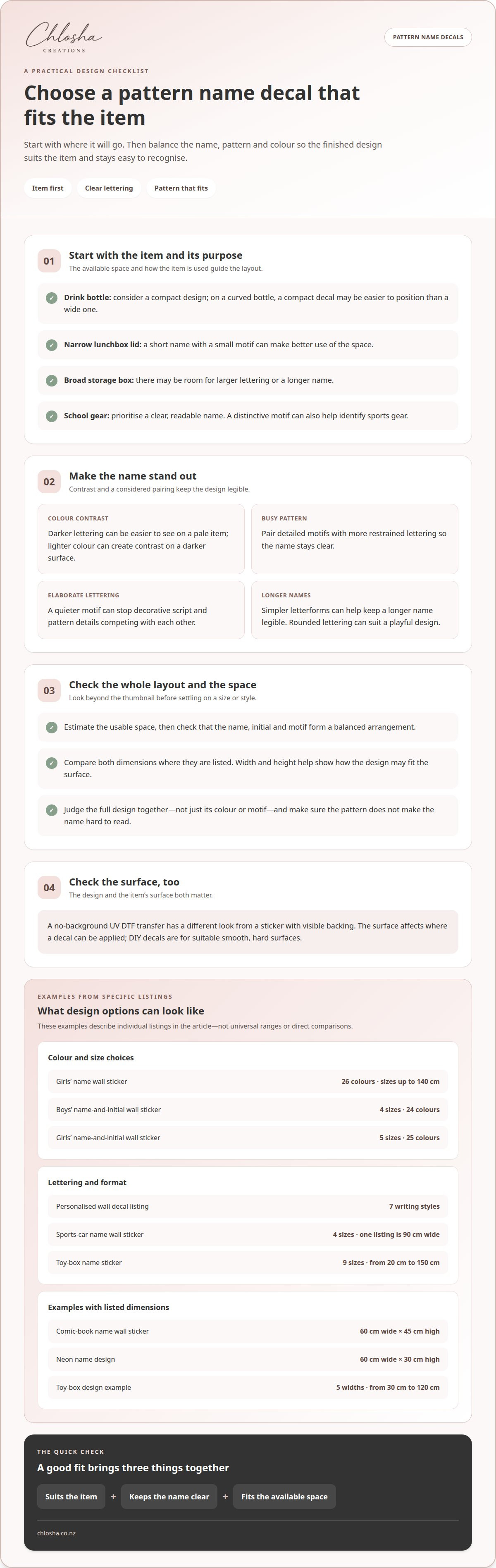
Designs range from a small icon beside simple lettering to a large name graphic for a bedroom wall. Some listings pair a child’s name with an initial, while others use comic-book or neon-inspired treatments. A girls’ name wall sticker is listed in 26 colours and sizes up to 140 cm. That range shows how colour and scale can shape the look as much as the pattern itself.
Match the design to its job
Start with the item and its purpose. A drink bottle may need a compact design, while a broad storage box has more room for larger lettering. For school gear, prioritise a clear, readable name. For a decorative item, you can choose a more expressive design.
Different examples show how use affects the available format. A sports-car name wall sticker is offered in four sizes, and one listing gives a width of 90 cm. A toy-box name sticker is offered in nine sizes, from 20 cm to 150 cm. These examples aren’t direct comparisons: the intended surface and design determine the useful size.
Check the shape and usable space before choosing. A narrow lunchbox lid may suit a short name with a small motif; a broad storage box can accommodate longer lettering or a larger design. On a curved bottle, a compact decal may be easier to position than a wide one. Make sure the design fits without making the name hard to read.
Balance pattern, colour and lettering
Colour choices can help a name stand out against its background. One boys’ name-and-initial wall sticker listing offers four sizes and 24 colours, while a girls’ version offers five sizes and 25 colours. Those numbers describe specific listings, not every design. For a pale lunchbox, darker lettering may be easier to see; on a darker surface, a lighter colour can create contrast.
Look at the lettering as well as the motif. A personalised wall decal listing offers seven writing styles, showing how font changes the overall feel. Rounded lettering can suit a playful design, while simpler forms can keep longer names legible. If the pattern is busy, restrained lettering helps balance it. If the name uses elaborate script, a quieter motif can prevent competing details.
Initials, illustrations and repeated shapes create different visual effects. A name with an initial gives the design a clear focal point. A comic-book style can feel bold, while a neon treatment draws attention through its colour effect. One comic-book name wall sticker is listed at 60 cm wide by 45 cm high. A neon name design is listed at 60 cm wide by 30 cm high. These examples show why checking both dimensions matters.
Check the final layout before choosing
Choose in a practical order: identify the item, estimate the available space, and settle on a readable name layout. Then compare the pattern’s detail and colour with the surface. A distinctive motif may help identify sports gear, while a clear, prominent name is often more useful on shared school supplies.
Finally, compare the full design rather than judging by its thumbnail. Check whether the name, initial and motif form one balanced arrangement. A toy-box design offered in five widths, from 30 cm to 120 cm, illustrates how the same idea can suit different spaces. The right choice is the one that fits the item, makes the name easy to recognise and reflects the style you want.
If you want more choice in the lettering, a personalised vinyl name sticker listing offers 33 colours and 20 font styles. A personalised sports cars name wall sticker is offered in 4 sizes, giving shoppers options to suit different spaces. For smaller belongings, a pack of personalised stick-on name labels contains 44 labels, allowing names to be added to multiple items.
Chlosha Creations: DIY Decal Sheets
Chlosha Creations offers DIY Decals for adding decorative designs to suitable smooth, hard surfaces. Choose a decal sheet if you want to personalise an item with a design beyond a single name; for clear identification, personalised name labels may be a better fit.
For school belongings, kids’ gear and shared family items, explore Personalised Name Labels or Personalised Icon + Name Label Packs. A name makes the item identifiable, while an icon adds a visual detail. Choose the option that suits the item and the person using it.
For help choosing between these options, contact Chlosha Creations.
Choose a design that feels like yours
Choose a design that reflects the person who will use the item. A favourite theme, meaningful motif or familiar colour can make an everyday belonging feel more personal. Keep the item’s purpose in mind, too, and select a design that suits how it will be used.
Before deciding, picture the decal on the item and consider whether its overall style feels right for the person. A thoughtful pattern can add personality to everyday belongings or make a gift feel more personal.
Ready to find a design that fits? Explore pattern name decal designs and take the next step towards a more personal finish.
