

Personalised daycare bag tags for little ones
Could one small detail make daycare drop-offs easier? A personalised daycare bag tag gives your little one’s bag a clear name marker, while a plastic loop attaches it to a handle or zip pull. It’s a practical way to distinguish their bag from others at kindy or daycare.
Choosing a tag means more than picking a cute design. It should be easy to read, suit the bag and include details that are useful for your family. Consider how it attaches, too, and allow enough time for making and delivery.
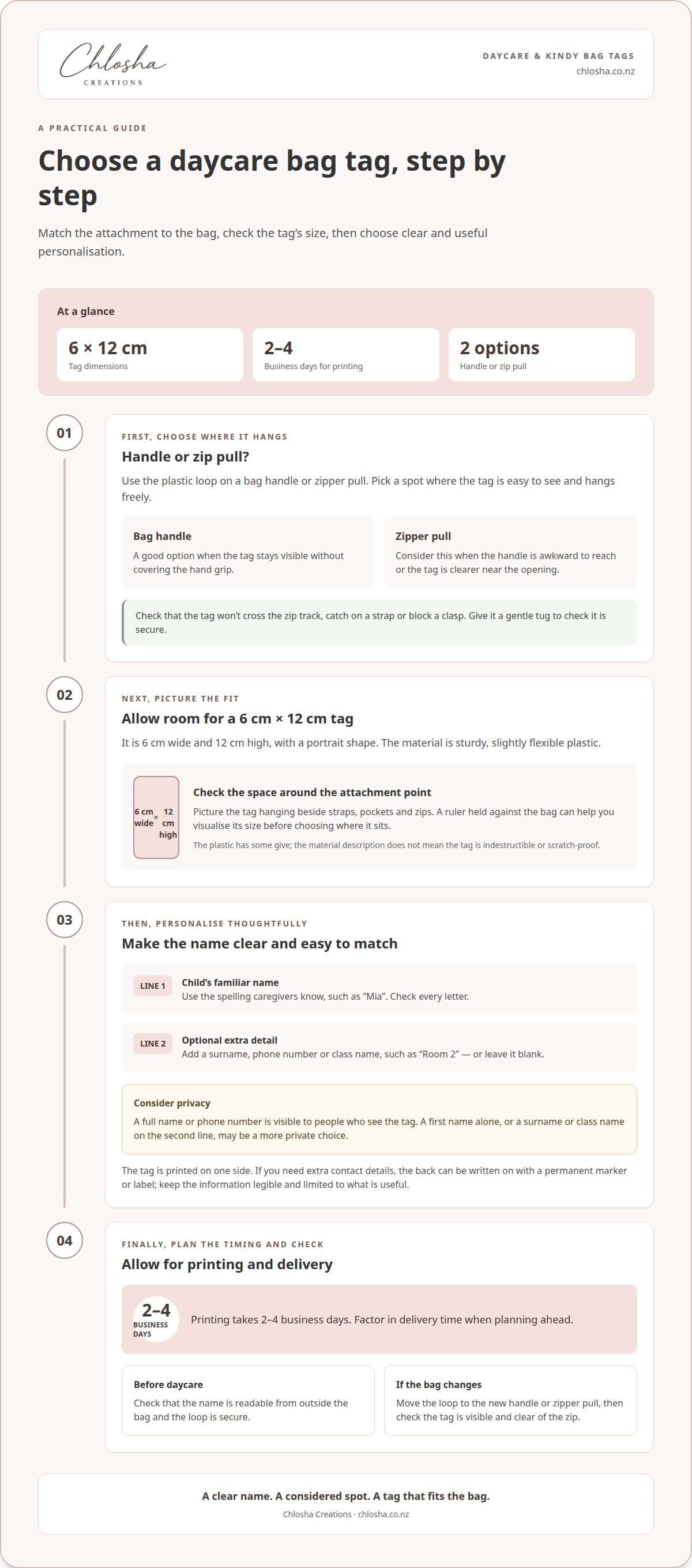
This guide explains the attachment options, materials and sizes to consider, plus ways to personalise the name and extra text. You’ll also find out what printing time to allow: printing takes 2-4 business days. With those details in mind, you can choose a tag that feels personal and works for everyday daycare routines.
Key Takeaways
- Attach a tag’s plastic loop to a bag handle or zip pull so it’s easy to spot at daycare.
- Consider the tag’s sturdy, slightly flexible plastic and 6 cm by 12 cm size when choosing one for a little one’s bag.
- Use the second personalisation line for a surname, phone number or class name, or leave it blank.
- Allow 2-4 business days for printing, then factor in delivery time when planning ahead.
- Explore name labels or personalised bag tags to find an option that suits your child’s daycare routine.
Attachment to bag handles or zipper pulls
A plastic loop gives a bag tag two attachment options: a bag handle or a zipper pull. On a daycare backpack, choose the handle if the tag stays visible without covering the grip. If the handle is awkward to reach, a zip pull can keep the name near the opening. The best position depends on the bag’s design and how your child carries it.
First, choose an attachment point where the tag will be easy to see. Place the loop around the handle or zipper pull, then secure it using its intended fitting method. Give the tag a gentle tug before packing the bag. Check that it hangs freely and doesn’t cross the zip track, catch on a strap or block a clasp.
For example, a small backpack with a short top handle may suit a zip pull better. A larger daycare bag with a clear handle may give the tag more room to hang. The plastic loop lets you choose either position, and you can move the tag when your child changes bags.
Could displaying a child’s name on a bag tag raise privacy or safety concerns? A full name or phone number makes personal details visible to anyone who sees the tag. For a more private approach, put the child’s first name on the front and keep extra contact details on the back or inside the bag.
The tag is printed on one side, leaving the back free for extra information. Add a surname, phone number or class name there with a permanent marker or label. Keep the details legible and limited to what would be useful if the bag went missing. A first name alone can identify a child’s belongings without displaying their full name.
- Handle: choose this point when the tag hangs clearly and stays clear of the hand grip.
- Zipper pull: use it when the handle is difficult to reach or the tag is easier to see near the bag opening.
- Back of tag: add practical contact details with permanent marker or a label, if needed.
Before daycare drop-off, check that the loop is secure and the tag is readable from outside the bag. Make sure it doesn’t obstruct the zip or get in the way when carrying the bag. If there are several straps, use the same attachment point so caregivers can find the tag easily.
A few small checks make personalised daycare bag tags easier to use every day. Attach the tag to the same handle each morning, with the name facing out. If the bag changes, move the loop to the new handle or zipper pull, then check that the tag is secure and visible.
Bag tag material and dimensions
A daycare bag tag is made from sturdy, slightly flexible plastic and measures 6 cm wide by 12 cm high. That gives it a portrait shape, with more height than width. The dimensions help you picture how it may sit against a backpack, tote or kindy bag before choosing where to attach it.
The plastic has some give rather than feeling completely rigid. That distinction can matter on a bag that gets packed, carried and put down throughout the day. A tag may move as its bag shifts, so consider how its 12 cm height will hang beside straps, pockets and zips. The material description doesn’t mean the tag is indestructible or scratch-proof.
Use the stated size as a practical guide. For example, compare the 6 cm width with the bag’s handle or the space beside its front pocket. Then picture the 12 cm height hanging down from that point. A narrow backpack may have less clear space around its front, while a larger daycare bag may leave more room for a tag to sit visibly.
Before settling on an attachment point, hold a ruler against the bag to visualise a tag measuring 6 cm by 12 cm. Check whether that outline would cover a pocket opening, rest against a strap or hang over a zip. This simple step gives you a clearer sense of scale than judging from a small product image.
- Width: 6 cm, useful to consider beside a narrow handle or pocket.
- Height: 12 cm, so allow vertical space below the attachment point.
- Material: sturdy, slightly flexible plastic, rather than a fully rigid material.
The dimensions also help when a bag has several possible hanging positions. A tag that fits beside a front pocket may sit differently on a short top handle. Think about where the 12 cm length will fall once the bag is carried, not only how it looks when the bag is lying flat. For a small child’s backpack, check that the tag won’t obscure a feature caregivers need to find, such as a pocket opening.
Material and size are useful starting points, but the bag itself determines the best fit. A 6 cm wide tag needs enough clearance around the attachment point, while its 12 cm length needs room to hang. Looking at both measurements together helps you choose a position that stays visible without crowding the bag’s straps or zips.
Personalised design and text options
A clear name is the starting point for a daycare tag. Use the spelling caregivers know, such as “Mia” rather than a nickname used only at home. Check every letter before ordering. A small typo can make the tag harder to match with the child or their bag.
The second personalisation line can contain a surname, phone number or class name. It can also be left blank. Choose one detail that helps identify the bag without crowding the main name. For example, “Mia” on the first line and “Room 2” on the second gives staff a simple reference.
A phone number can help someone contact a parent if a bag goes missing, but it also displays contact details to anyone who sees the tag. If privacy matters, use a surname or class name instead, or leave the second line blank. Consider whether extra identification is worth displaying more information.
- First line: use the child’s familiar name, such as “Mia”.
- Second line: add a surname, phone number or class name, or leave it blank.
- Final check: review spelling and decide whether the information is suitable to display.
Could you use a label or embroidered name instead of a tag? Name labels can identify suitable smooth belongings, such as a drink bottle or lunchbox, while embroidery puts a name directly on fabric. Each option suits a different surface, so a tag is useful when you want one removable identifier for a bag.
For labels on belongings, choose wording that stays easy to recognise. A first name may be enough for a familiar item, while a surname can help distinguish shared supplies. Personalised name labels offer another way to mark suitable items that travel to daycare alongside the bag.
How much do personalised daycare bag tags cost in NZ? The total depends on the price listed for the specific item and any applicable delivery charge. Check both before ordering, as delivery contributes to the final cost.
Design choices can also help a child recognise their belongings. Keep the name prominent and avoid extra wording that competes with it. For example, “Leo” with “Kindy” on the second line gives a child a name and a simple visual clue when finding their bag.
Before submitting the personalisation, read each line from left to right and check the spelling. Decide whether the second line should show a surname, phone number, class name or nothing. This final review keeps the information relevant to your family and makes the tag easier to identify during daycare routines.
Printing and delivery timeframes
Printing takes 2-4 business days for a personalised bag tag. That is the printing period, not the time the parcel spends travelling to your New Zealand address. Keep those stages separate when planning for a daycare start date, birthday or change of bag.
Express shipping is estimated at approximately 1-6 days. The estimate describes shipping, while printing has its own 2-4 business-day timeframe. They are separate stages, so don’t treat the shipping estimate as the complete time from ordering to arrival. Allow for both when deciding when to order.
How do you order personalised daycare bag tags? Choose a tag, enter the child’s name and decide whether to add a second line. Check the spelling and details before submitting your order, then allow time for making and delivery.
A simple planning sequence helps avoid a last-minute scramble:
- Choose the tag and enter the name exactly as it should appear.
- Decide whether the second line will include a surname, phone number, class name or no extra text.
- Review the personalisation details before completing the order.
- Allow 2-4 business days for printing, then account for the chosen shipping timeframe.
If you’re ordering before a new kindy term, work back from the first day and allow time for making before the parcel’s journey. The same applies to a birthday gift: plan around the date it needs to arrive, not the date production begins.
Business days and calendar days are not interchangeable. The printing estimate is stated in business days, while the express shipping estimate is approximately 1-6 days. Keep those units as given when planning. Don’t convert the printing period into calendar days or assume the shipping estimate uses business days.
Delivery timing can vary depending on the destination and shipping option. An address in one part of New Zealand may have a different journey from an address elsewhere, so an express estimate is a planning guide rather than a guaranteed arrival date.
Make ordering easier by deciding on the spelling and second-line details beforehand. If you want the second line blank, choose that deliberately. A final check of “Aroha” versus “Aroha R.”, for example, helps ensure the right text is entered.
Once the order is submitted, use the 2-4 business-day printing period as the first planning stage. Add the relevant delivery estimate afterwards. This approach gives families a clearer timeline for daycare and kindy preparations without treating printing and shipping as one process.
The bag tag has single-sided printing, and additional information can be added to its back with permanent marker or a label. That gives you a way to keep the printed side focused on the chosen personalisation while placing other details on the reverse if needed. Decide what belongs on each side before submitting the order, and prepare any wording you plan to add separately. The back can be updated with a marker or label without changing the single-sided printing.
What personalised daycare bag tags are available in New Zealand?
For a daycare bag in New Zealand, a personalised tag is one way to make the bag easier to identify. The available details can include a child’s name and an optional second line. Choose the information to suit the bag’s use, whether it travels to daycare, kindy or a family member’s home.
Decide what the tag needs to do before choosing its text. A child’s first name can identify their backpack, while a class name can distinguish bags used in the same room. A surname or phone number adds another identifying detail, but also makes more personal information visible.
Some families want a tag for one bag; others need to identify several belongings. A tag can mark the backpack, while a name label can go on suitable items such as a drink bottle or lunchbox. Choose according to the surfaces involved and whether one visible identifier is enough.
A backpack with a clearly visible tag may not need any other name marking. If a child also takes a lunchbox to kindy, a separate label can identify it when it’s away from the bag. Using the same name across belongings gives caregivers a consistent identifier, while the tag can still move between bags.
Compare the main options by where each one is used:
- Bag tag: suits a bag that has a handle or zip pull for its loop.
- Name label: suits compatible belongings, such as a drink bottle or lunchbox.
- Embroidered name: places identification on fabric, rather than adding a separate tag.
Keep personalisation simple: use one familiar name, then decide whether a second line adds useful context. For siblings attending the same daycare, a surname can help distinguish belongings. A child who recognises their room name may find a class label more useful than a phone number.
Before choosing, consider three things: which item needs identifying, where the name should appear and how much information you want to display. A tag works as a visible marker on a bag. Labels can identify other suitable belongings, while embroidered names are for fabric items.
For a practical setup, start with the daycare bag and add labels only when they solve a separate identification need. A tag on the backpack and a name label on the lunchbox can identify two different items without adding text everywhere. Explore personalised options for little ones to find a format that fits your family’s daycare routine.
Chlosha Creations: Daycare & Kindy Name Labels
Chlosha Creations offers Daycare & Kindy Name Labels and Personalised Keyrings & Bag Tags to help identify items in a little one’s daily kit. A bag tag suits a daycare backpack, while a name label can mark a suitable lunchbox or drink bottle. Choose according to which belongings need a clear name.
For a simple text design, Personalised Name Labels are a practical option. Personalised Icon + Name Labels pair a name with an icon, giving children another visual cue to recognise their belongings.
Once you’ve decided what to label and which details to include, explore the relevant options from Chlosha Creations. If you’d like help with your choice, contact Chlosha Creations.
Choose a tag that fits your family’s routine
Think about how your child recognises their belongings: a familiar name, a visual cue or both may suit their daycare routine. Next, decide which items need identifying and choose a format that fits each one.
For a practical setup, start with the daycare bag and add labels only when they solve a separate identification need. A tag on the backpack and a name label on the lunchbox can identify different items without adding text everywhere.
For belongings that need a name label, explore the personalised name label range and choose an option that suits your family’s routine. A considered choice can help make daycare drop-offs feel more organised, while keeping personal details to the level you’re comfortable displaying.
Frequently Asked Questions
What materials are best for durable daycare bag tags?
A sturdy, slightly flexible plastic tag can identify a bag in everyday use. Consider whether you need a removable tag for the backpack or a separate label for belongings that are handled or washed often.
How do personalised bag tags attach to daycare bags and backpacks?
The plastic loop attaches to a bag handle or zipper pull. If a backpack has a small zip tab, its handle may give the loop more room. After attaching the tag, check that it hangs clear when the bag opens and closes. A gentle tug helps make sure the loop is secure before your child takes the bag to daycare.
What information should you put on a daycare bag tag?
Use the child’s familiar first name as the main identifier. The optional second line can show a surname, phone number or class name, or stay blank. Include only details that help identify the bag; a home address is usually unnecessary. For example, “Ari” with “Kōwhai Room” gives a caregiver both a name and a class reference.
