

Stop School Lunch Boxes Going Missing: A Parent's Guide
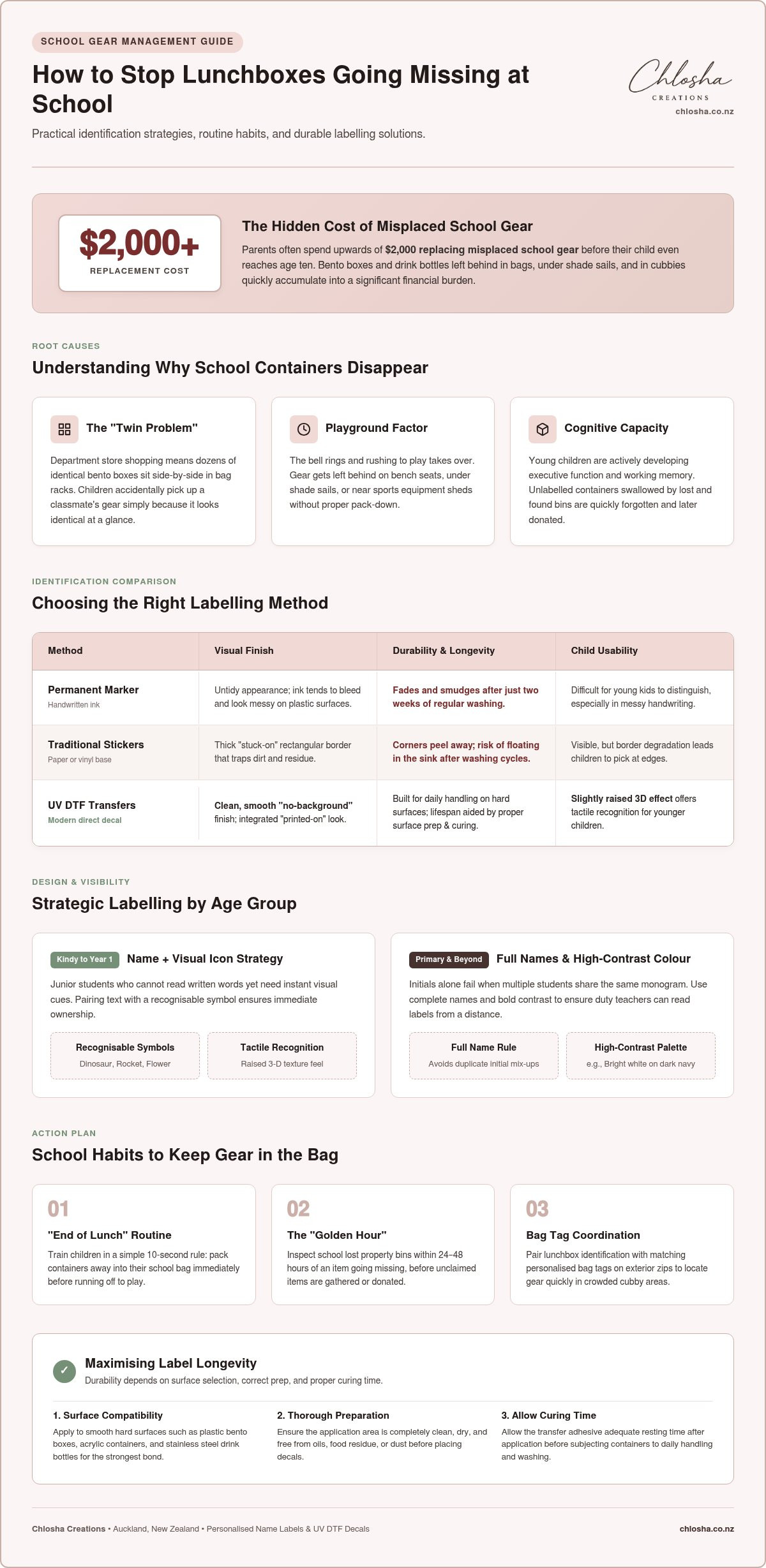
Did you know that parents often spend upwards of $2,000 replacing misplaced school gear before their child even turns ten? It's a staggering figure. It feels all too real when you're staring at an empty spot in the bag cubby where a brand-new bento box should be. If you're tired of the constant hunt through the lost property bin, learning how to stop lunch boxes going missing at school is the only way to save your sanity and your budget.
We understand the frustration of finding a "waterproof" label floating in the sink or watching a name sticker peel away after just one wash. You want a solution that stays put and looks professional without the mess of permanent markers that smudge. This guide shares practical strategies and durable labelling tips to ensure your child's lunchbox actually makes it home every afternoon. We'll explore the best ways to organise school gear, simple habits for your little ones, and why modern, no-background decals are the secret to keeping items identified all year long.
Key Takeaways
- Learn why identical school gear leads to constant mix-ups and discover how to stop lunch boxes going missing at school with better identification.
- Discover why UV DTF transfers offer a sleek, "printed-on" finish that stands up to daily use better than traditional stickers or markers.
- Find out how to establish a simple "end of lunch" routine and use personalised bag tags to keep gear where it belongs.
- Master the "Golden Hour" for checking lost property and learn why using full names is more effective than just initials.
- Get practical tips on surface preparation and curing times to ensure your labels stay secure all year long.
Understanding Why Lunch Boxes Go Missing at School
Walk into any school bag area at lunchtime and you will see a chaotic sea of backpacks, drink bottles, and plastic containers. It is a prime environment for mix-ups. Parents often wonder exactly how to stop lunch boxes going missing at school when it seems to happen on a weekly basis. The reality is that items rarely vanish into thin air. Instead, they disappear due to a combination of high-energy playground distractions and a phenomenon known as the "Twin Problem". When children are in a rush to finish eating and run out to the oval, careful tracking of their personal belongings is the last thing on their minds. Unlabelled containers quickly end up swallowed by traditional school lost and found systems, where unclaimed gear is eventually donated or discarded.
The Problem with Identical Gear
Heading to the local department store to buy the trendiest bento box feels like a win for back-to-school preparation. The catch? Half the other parents in your child's year level had the exact same idea. This creates the "Twin Problem" where dozens of identical blue, pink, or green containers sit side-by-side in the bag racks. In the lunchtime rush, a child will easily grab a classmate's lunchbox by mistake simply because it looks identical to theirs at a glance. Without a distinct visual differentiator, these accidental swaps go unnoticed until your child opens their bag at home. Using highly visible school name labels to make your child's gear look unique from across the room is essential to prevent these innocent mix-ups.
The Playground Factor
The bell rings and freedom calls. For most kids, the playground is far more exciting than packing up their lunch area properly. Containers get left behind on bench seats, forgotten under the shade sails, or dropped near the sports equipment sheds. When gear lacks clear ownership markings, other students or duty teachers have no way of knowing who it belongs to. It either sits out in the weather or gets tossed into the lost property bin. For parents, this cycle causes immense emotional and financial frustration, especially when replacing premium containers that were built to last the whole year.
Effective Labelling: Choosing the Right Identification
Many parents reach for a permanent marker when thinking about how to stop lunch boxes going missing at school. It seems quick and cheap. However, ink quickly fades, smudges, and looks incredibly untidy after just two weeks of washing. Traditional stickers are another common choice, but they often leave a thick "stuck-on" border that catches dirt and peels away at the corners. Because young children are still developing executive function and working memory, keeping track of their gear is a genuine cognitive challenge. Clear, high-contrast identification makes it much easier for tired kids, teachers, and lost property monitors to return misplaced items instantly. Placing these identifiers on highly visible, flat areas like the main lid or the front face ensures they can be read at a glance.
Why UV DTF Labels are the Modern Choice
Standard adhesive options often fail because they lack durability on heavily handled items. This is where personalised name labels NZ families trust offer a far superior alternative. Utilising premium UV DTF transfer technology, these decals provide a clean, smooth, "no-background" finish that looks completely integrated into the surface. Rather than looking like a sticker slapped on top, the text features a slightly raised 3-D effect that kids can feel. This tactile recognition helps younger students identify their own property quickly. These transfers are ideal for smooth hard surfaces like plastic bento boxes and stainless steel drink bottles, ensuring the name stays sharp and legible over months of daily use.
Visibility Strategies
Maximising visibility requires strategic design choices based on your child's age. For junior students who cannot read their full written name yet, using personalised icon name labels nz parents recommend is a brilliant strategy. Pairing a name with a recognizable symbol like a dinosaur, rocket, or flower allows a kindy or Year 1 student to claim their container instantly. It is also wise to choose font colours that pop dramatically against the background material, such as bright white text on a dark navy lunchbox. If you want to explore the full range of identification options for the upcoming school term, you can read through The Ultimate Guide to Personalised Name Labels in NZ to find the perfect fit for your family's daily routine.
Practical Strategies to Keep Gear in the Bag
Even the most durable labels need a bit of help from good old-fashioned habits. If you are wondering how to stop lunch boxes going missing at school, the answer often lies in the "End of Lunch" routine. Encourage your child to put their container back in their bag as soon as they finish eating. It sounds simple, but many items go walkabout because they are left on the bench while the owner runs off to play. Teaching your child to check their "spot" before the final bell rings can save you a trip to the lost property bin. Habits are the ultimate safety net for your school gear budget.
Habit-Forming at Home
The best time to start building these routines is during the school holidays. Practise the "open-eat-pack" cycle with picnic lunches in the backyard or at the local park. You can even set up a simple reward system to keep them motivated. If they bring their gear home every day for a full week, they get a small treat or extra screen time on Friday afternoon. This shift makes the child feel responsible for their own kit rather than relying on you to hunt through the bag racks. While following USDA guidelines on packing safe lunches ensures their food stays fresh, these home-grown habits ensure the container actually makes it back to the kitchen for a wash.
Using Secondary Identifiers
Sometimes the issue isn't actually the lunchbox. It's the bag it lives in. In a crowded school corridor, dozens of backpacks look identical. Attaching a personalised name tag to the main handle acts as a visual beacon for your child. Using custom name keyrings nz families recommend makes it easy to spot their bag from across the room. When the bag is easy to find, the lunchbox is much more likely to end up inside it instead of being left on a random table.
For younger kids at kindy or daycare, icon-based labels on the bag handle help them identify their own gear before they can even read their own name. Adding a distinctive accessory, such as a bright strap or a unique keyring, creates a visual "anchor". This simple hack prevents their gear from being picked up by another student in the afternoon rush. It's about creating layers of identification that work together to keep everything organised.
Navigating the School Lost Property System
Friday afternoon is often the "Golden Hour" for school lost property. Most schools do a final sweep of the playgrounds and halls before the weekend, meaning the bins are at their fullest. If you're trying to figure out how to stop lunch boxes going missing at school, being proactive about checking these communal areas is a must. Don't wait for your child to remember; they often won't. A quick five-minute scan on your way to pickup can save you the $50 or more it costs to replace a premium bento box. While you are there, you might even find that drink bottle that vanished three weeks ago.
Making it Easy for School Staff
School monitors and parent volunteers are busy. They aren't going to open every container to look for a name hidden on the inside of a lid. This is why school name labels should always be placed on the outside of the gear. A sleek, professional-looking label with a no-background finish signals that the property is well-loved. It makes it much more likely that a teacher will set it aside or hand it back directly rather than tossing it into the abyss of the lost property bin. Always use full names rather than just initials. "J.S." could belong to five different kids in Year 2, but a full name is unmistakable. If you've passed gear down to a younger sibling, make sure you update the label. A name that doesn't match anyone in the current class list is almost impossible for staff to return.
The Lost Property Rescue Mission
Searching through a mountain of unlabelled jumpers and crusty containers can be overwhelming. To make it easier, teach your child exactly where the lost property area is on their very first day. Encourage them to take ownership of the search instead of doing it all for them. If they know they have to spend their playtime digging through the bin, they'll be more careful with their gear during the day. It's a simple lesson in responsibility that pays off in the long run.
If you do find a lost item but the label has come off, it's a sign to re-evaluate your identification method. Standard stickers often fail under the pressure of daily school life and frequent washing. Once you've rescued the item, give it a good scrub and apply a fresh, durable decal to prevent a repeat performance. Learning how to stop lunch boxes going missing at school is much easier when you have the right tools for the job.
Ready to make your gear stand out? You can order durable school name labels that stay put and look great all year long.
Maximising the Life of Your Lunch Box Labels
You've spent time choosing the perfect design to help with how to stop lunch boxes going missing at school. Now, you want to make sure that identification stays put. The secret to a long-lasting label isn't just the quality of the transfer; it's the preparation of the surface. Before you even think about peeling that backing, give the area a thorough clean with rubbing alcohol. This removes invisible oils from fingers and manufacturing residues that can prevent the adhesive from bonding properly. A clean surface is the foundation of a label that lasts the entire school year.
Once applied, patience is your best friend. Follow the 24-hour rule: let the label sit at room temperature for a full day before sending it off to school for daily use. If you plan on using a dishwasher, you must wait at least 72 hours before the first cycle. This allows the adhesive to cure fully against the container. While these transfers are highly durable, their lifespan depends on this initial bonding period and the type of surface they are on. Smooth, hard plastics and stainless steel are the gold standard for UV DTF, providing the most reliable surface for your strategy on how to stop lunch boxes going missing at school.
Professional Application Tips
To get that professional, printed-on look, use firm pressure during the application. A squeegee is a handy tool, but a firm thumb works just as well to push out any tiny air bubbles. When it's time to remove the clear carrier sheet, peel it back slowly at a very low angle, almost flat against the surface. This technique ensures every part of the design stays firmly attached. If you're dealing with a tricky curved lunchbox lid or a tapered drink bottle, a quick blast from a hair dryer on a low setting can help the transfer conform to the shape more easily.
Long-Term Care for UV DTF Transfers
When washing your gear, treat the labelled area with a bit of care to maintain that premium look. Avoid using abrasive scrubbers, harsh steel wool, or gritty cleaners, as these can scratch the raised 3-D finish over time. These decals are a brilliant Name It labels alternative because they don't have a background to peel, curl, or trap dirt. Remember that while they are designed for the rigours of school life, durability is always a result of correct application and surface compatibility. By following these simple steps, you'll ensure your child's gear remains clearly identified from the first day of term until the very last bell rings.
Keep Your Child's Gear Safe All Year
Keeping track of school items doesn't have to be a daily struggle. By combining simple school-day routines with high-quality identification, you've now got a solid plan for how to stop lunch boxes going missing at school. Remember that a clear, raised name decal not only helps your child recognise their own gear in a crowded bag area but also makes it much easier for teachers to return misplaced items quickly.
Our family-run business is proud to help whānau across New Zealand protect their investments in quality school gear. Our durable UV DTF technology provides a sleek, no-background finish that looks professional and stays put through the rigours of the term. If you're ready to give your child's lunchbox a premium look that's easy to spot, explore our range of premium UV DTF name labels for school. With the right labels and a few new habits, you can say goodbye to the lost property bin for good. Here's to a stress-free school year!
Frequently Asked Questions
Is it really worth labelling every single lunch container?
Absolutely, because even a small snack pot can be easily misplaced or swapped during a busy lunchtime. Labelling every item is a core part of how to stop lunch boxes going missing at school as it removes any guesswork for teachers and monitors. When every piece of a bento set is clearly marked, the chances of the entire kit returning home in the school bag increase significantly.
Where is the best place to put a name label on a lunch box?
The best spot is always on a flat, smooth area of the main lid where it is immediately visible to anyone picking it up. Avoid placing labels on the bottom or inside the lid, as school staff rarely have time to hunt for identification. A high-contrast, no-background decal on the front face ensures the item is easily identified from across the bag area or inside a crowded lost property bin.
What should I do if my child’s lunch box is already lost?
Visit the school lost property area during the "Golden Hour" on a Friday afternoon when the bins are typically at their fullest. If the item isn't there, check with the classroom teacher or the office staff. If you eventually find the item but the old identification has failed, it's a great time to apply a more durable UV DTF transfer to prevent it from vanishing again.
Are these labels dishwasher safe for the whole school year?
Our UV DTF transfers are designed for daily school life, but their longevity depends on correct application and curing times. You must wait at least 72 hours before placing a newly labelled item in the dishwasher. While they are highly durable, we recommend using the top rack only and avoiding abrasive scrubbers on the decal area. This care routine helps the personalised finish stay sharp and professional all year long.
Can I use these labels on silicone or fabric lunch bags?
No, these premium transfers are specifically designed for smooth, hard surfaces like plastic, glass, and stainless steel. They will not bond correctly to flexible silicone, textured rubber, or fabric materials. For insulated lunch bags or soft-shell carriers, we recommend using one of our personalised bag tags or keyrings instead. This ensures your identification stays secure on the handle where it is most effective.
How do I remove an old label if I want to pass the lunch box to a sibling?
Removing a UV DTF decal is straightforward if you use the right technique. Start by catching an edge with your fingernail and peeling the transfer back slowly at a very low angle. If the bond is particularly strong, you can use a hair dryer on a low setting for a few seconds to soften the adhesive. This makes it easier to clean the surface before applying a fresh name for the next child.
Do I need to put a phone number on the label or just a name?
A full name is the most important detail for school items so teachers can return them to the correct classroom. Adding a phone number is an excellent secondary measure, especially for older students who might leave gear at sports practice or on the bus. While a name is usually enough for the school grounds, a phone number provides extra peace of mind for items that travel beyond the gate.
