

UV DTF Transfers New Zealand: The Complete Guide to Premium No-Background Decals
Most people think a label is just a sticker, but the gap between a messy, peeling edge and a seamless, raised finish is exactly why UV DTF technology is transforming how we personalise items. It’s incredibly frustrating when you spend time labelling your kids’ drink bottles or lunchboxes only for the edges to lift after a single wash or a trip to kindy. You want a result that looks professional and feels integrated, not something that looks like a cheap, clear-backed sticker with a visible border.
In this guide, we’ll show you how UV DTF transfers New Zealand families and small businesses use provide a clean, no-background finish that mimics high-end industrial printing. You’ll discover how these durable, 3D-effect decals can survive the rigours of the school year and give your own product runs a premium, tactile edge. We’ll walk through how the technology works, where to use it, and how to apply these intricate designs for a permanent-looking finish that truly lasts.
Key Takeaways
- Discover how UV DTF technology creates a professional, raised finish that feels like it is part of the item rather than a simple sticker.
- Learn why the "no-background" design is a superior choice for drink bottles and lunchboxes, as it eliminates the messy borders that often trap dirt and peel.
- Compare the differences between traditional vinyl and the UV DTF transfers New Zealand creators use to achieve higher detail and better durability on hard surfaces.
- Master the application process with our step-by-step guide to ensure your personalised decals bond correctly for the school year ahead.
- Find out how to elevate your small business branding or school gear organisation with custom decals that offer a high-end, tactile 3D effect.
What are UV DTF Transfers? Understanding the Technology
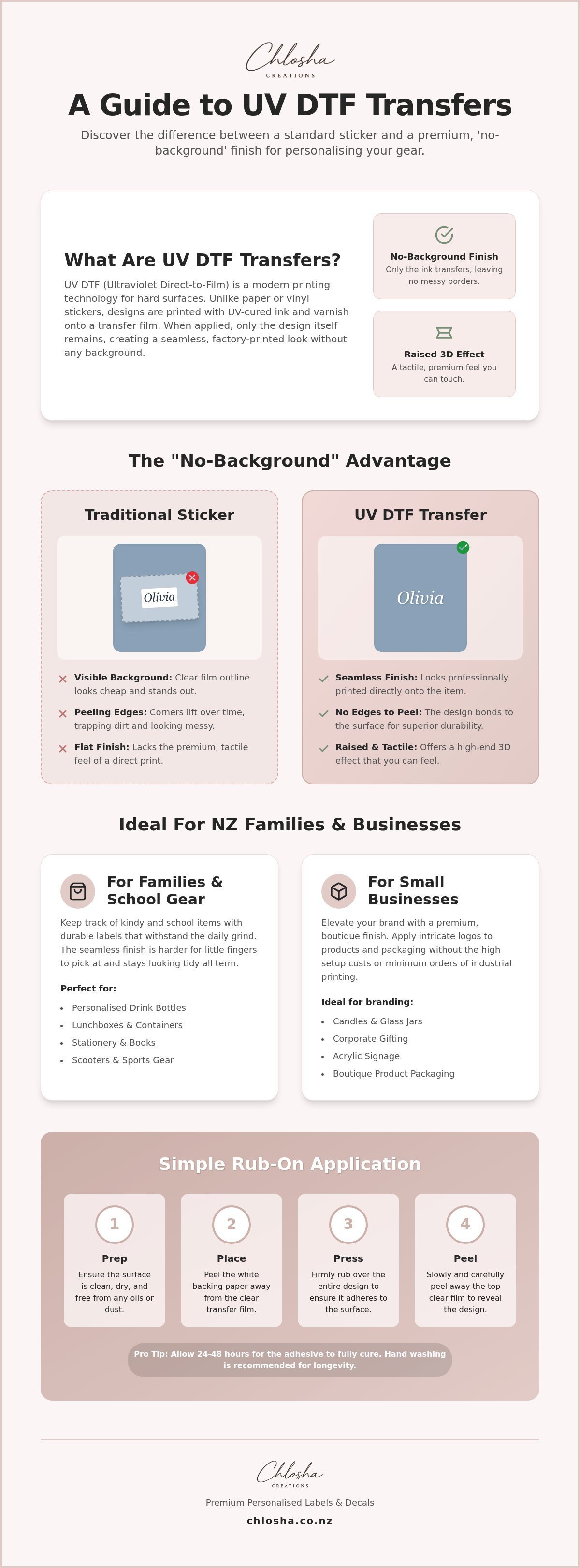
UV DTF stands for Ultraviolet Direct-to-Film. It is a modern printing method designed specifically for hard surfaces. Unlike the labels you might find at a local stationery shop, these don't rely on being printed onto paper or plastic sheets. Instead, the design is printed onto a special film and cured instantly using powerful UV lights. This process creates UV DTF transfers New Zealand families and businesses use to achieve a high-end, professional look on almost any hard object.
The most impressive feature of this technology is the "no-background" finish. When you apply one of these transfers, only the ink and varnish remain on your item. There is no clear border, no white edges, and no unsightly film surrounding your design. It looks as though the artwork was printed directly onto the surface at a factory. The result is clean, smooth, and incredibly sharp.
The Science Behind the Raised Finish
This isn't a flat, one-dimensional print. The technology uses multiple layers of specialised ink topped with a clear varnish. These layers build up to create a tactile, 3D effect that you can actually feel with your fingertips. It adds a premium touch to everything from personalised name labels to complex business logos. The adhesive layer is applied during the printing process, ensuring that even the most intricate details stay exactly where they should. Because it's a cold-transfer, rub-on method, you don't need heat or heavy machinery to get a perfect result at home. It just works.
Why NZ Families and Businesses are Switching
Kiwis are moving away from standard stickers for a few simple reasons. First, the aesthetic is night and day. On a clear glass jar or a matte metal drink bottle, a traditional sticker often looks like an afterthought. UV DTF looks like part of the product. It’s a popular choice for school gear because it handles the daily bumps of a lunchbox better than paper-based options. Small business owners across the country are also using UV DTF transfers New Zealand wide to brand their products with a professional edge. It allows them to achieve a boutique look for small batches without the massive setup costs of industrial printing. Whether it's for a kindy lunchbox or a boutique candle jar, the finish is consistently clean and sophisticated.
The "No-Background" Advantage for Personalisation
Why settle for a visible border when you can have a seamless finish? Traditional stickers often come with a white or clear outline that surrounds the actual design. While this might seem like a small detail, that extra layer is often where the trouble starts. It catches dust, traps lint from the bottom of school bags, and eventually begins to lift at the corners. This creates a messy look that detracts from the item you are trying to organise.
With UV DTF transfers New Zealand parents and makers prefer, that background is completely gone. You are left with only the design itself. Whether it is a name in a delicate cursive font or a detailed icon, the result looks like it was printed directly onto the item at the factory. This is especially striking on clear glass or dark-coloured drink bottles where clear borders usually stand out. The finish is clean, sharp, and integrated with the surface of your gear.
Clean Aesthetics for School and Kindy Gear
Keeping track of school gear is a full-time job for any busy family. You want labels that look good and stay tidy throughout the term. Because there is no background film to peel away, these transfers maintain a much cleaner look over time. They don't get that "grubby" edge that standard labels often develop after a few weeks in a backpack. They sit flush against lunchboxes and stationery, providing a smooth finish that is much harder for little fingers to pick at. If you are looking to get organised for the new term, our personalised name labels are a great place to start your school prep.
Professional Branding for Small Businesses
For Auckland makers and small businesses, presentation is everything. If you are selling handmade candles, boutique jams, or custom glassware, you want your branding to reflect the quality of your work. Applying intricate logos used to mean expensive industrial printing or hours of tedious work. UV DTF transfers New Zealand businesses use change that. You can apply complex, multi-coloured designs to glass jars and corporate gifts with a simple rub-on method. There is no background to worry about, so your logo pops against the surface with a premium, 3D-effect look. It is a practical way to achieve a boutique finish for small product runs without the need for large minimum orders or complex machinery.
UV DTF vs Vinyl Decals: Which One Should You Choose?
Choosing between labelling methods often comes down to the specific item you're decorating. Traditional vinyl has been a staple for years. It's a reliable, thicker material that works well for large, simple shapes. However, vinyl decals usually have a visible border or a clear "carrier" layer that stays on the product. In contrast, UV DTF transfers New Zealand makers use are significantly thinner and more flexible. This allows the design to sit closer to the surface, providing that "printed-on" look we’ve discussed previously.
UV DTF technology also wins on detail. Because the ink is cured with UV light, it can handle incredibly fine lines and tiny text that would be a nightmare to "weed" with traditional vinyl. If your business logo has intricate swirls or small font, UV DTF is the way to go. It generally offers better resistance to scratches and fading, too. While standard vinyl can sometimes peel or lose its colour after repeated handling, UV DTF is designed to withstand the daily rub of hands and cleaning.
When to Use Traditional Vinyl
There are still times when vinyl makes sense. If you need a temporary label; perhaps for a one-off event or a seasonal display; vinyl is easier to remove. It's often more cost-effective for very large, basic shapes like big letters on a storage bin. Vinyl is also quite forgiving on softer, more flexible plastics that might warp or stretch, as it can move slightly with the material.
When UV DTF is the Superior Choice
For anything that needs a permanent, high-end feel, UV DTF transfers New Zealand wide are the clear winner. It's the best choice for branding drinkware, glass jars, and hard-surface equipment that gets used every day. If your design requires vibrant, high-resolution colours or a specific 3D texture, this technology delivers a finish vinyl simply can't match. It’s perfect for items that need frequent cleaning, such as lunchboxes and drink bottles, where you want the label to stay looking sharp for the whole school year.
How to Apply and Care for Your UV DTF Transfers
Applying these decals is a straightforward process. Unlike the garment transfers you might have seen that require a heat press or iron, these are a cold-transfer method. You only need firm hand pressure to get a professional result. It is a simple "rub-on" technique that anyone can do at home.
First, you must ensure the surface of your item is clean, dry, and completely smooth. Any dust or oils from your hands can interfere with the adhesive. Once you are ready, position the transfer carefully. Be aware that the adhesive on UV DTF transfers New Zealand families use is incredibly strong and starts to bond the moment it touches the surface. It is very difficult to reposition once it has made contact. Use a squeegee or the edge of a credit card to apply firm, even pressure across the entire design. This pushes out any tiny air bubbles and ensures every part of the detail is locked down. Finally, peel the clear carrier film away slowly at a very low angle. If any part of the design lifts, just lay the film back down and rub it again.
Surface Compatibility: What Works and What Doesn’t
These transfers are designed for hard, non-porous surfaces. You will get the best results on glass, acrylic, smooth metal, and hard plastics. They are perfect for personalising items like stainless steel drink bottles and plastic lunchboxes. However, they aren't a universal solution. You should avoid textured surfaces, as the adhesive needs a flat area to grip. Silicone and "soft-touch" rubberised plastics are also unsuitable because they naturally repel adhesives. It is also important to be cautious with low-surface-energy plastics like polypropylene, which can be tricky for any label to stick to long-term. If you want to see our full range of designs for your gear, you can browse our personalised name labels to find the perfect fit.
Curing and Longevity Tips
While the bond is instant, the adhesive needs time to reach its full strength. We recommend waiting at least 24 hours before you start using the item normally. If you plan on washing the item, the 72-hour rule is your best friend. Waiting three full days before any exposure to water allows the bond to set properly. While these UV DTF transfers New Zealand wide are very durable, we always suggest hand-washing to keep them looking new for as long as possible. High-heat dishwasher cycles can be harsh on the edges of any decal over time, so a quick wipe with warm soapy water is the best way to ensure your labels survive the entire school year.
Practical Use Cases for NZ Families and Businesses
How can you best use this technology in your own daily life? The versatility of UV DTF transfers New Zealand families and makers use means they can be applied to almost any hard surface you can think of. While we often focus on the classroom, these durable decals are just as useful in the pantry, at the skate park, or behind a market stall. They provide a high-end look that helps you stay organised while adding a personal touch to your most-used items.
For school and kindy, these are the ultimate solution for high-use gear. Think about the drink bottles that get knocked around in bags or the lunchboxes that go through the wash every evening. Because the finish is so clean and integrated, the labels are much less likely to be picked at by curious little fingers. You can also use them to mark stationery, rulers, and pencil cases, ensuring that lost property doesn't become a permanent home for your children's belongings.
The durability of these transfers makes them a brilliant choice for sports and outdoor equipment. Custom name decals work beautifully on the smooth surfaces of scooters, bikes, and helmets. These items take a lot of wear and tear at the park; however; the scratch-resistant nature of UV DTF means the names stay clear and vibrant. For home organisers, these transfers allow you to create a uniform, sleek look in the kitchen. They sit perfectly on glass pantry jars and plastic storage bins, giving you a professional aesthetic without the unsightly borders of standard stickers.
Personalised Gift Ideas
Creating a thoughtful gift doesn't have to be complicated. If you want to make a teacher gift feel truly special, a personalised decal on a nice glass tumbler or a notebook adds a professional, heartfelt touch. You can even use DIY decal sheets to create your own personalised keyrings and bookmarks at home. These are fantastic for birthday favours or unique "goodie bag" fillers for special occasions, providing a custom result that feels much more premium than a paper sticker.
Custom Logo Transfers for Branding
Achieving a factory-printed look is no longer just for big corporations. Small NZ businesses can use these transfers to brand their products with a sophisticated, 3D-effect finish. Whether you are selling handmade candles in glass jars or providing corporate gifts for a local event, UV DTF transfers New Zealand wide offer a practical way to elevate your presentation. By ordering custom UV DTF printing, you can turn your specific business logo into a professional transfer that is easy to apply. Explore our Business & Logo collections for professional branding solutions that help your small business stand out with a clean, no-background look.
Ready to Transform Your Gear?
Choosing the right labelling method doesn't have to be a headache. Whether you're a parent prepping for the school term or a small business owner looking for that professional edge, the 3D effect and clean finish of these decals offer a level of quality that standard stickers simply can't reach. By opting for UV DTF transfers New Zealand families and makers trust, you're investing in a look that is both durable and sophisticated.
As an Auckland-based family business, we take pride in every sheet we print. Our premium no-background finish ensures your designs look like they were printed directly onto your favourite drink bottles and lunchboxes. If you're local to Auckland, you can even choose local pickup to get your labels even faster. Ready to upgrade your gear? Explore our range of UV DTF name labels and decals today. We can't wait to help you get organised with a finish you'll love.
Frequently Asked Questions
Are UV DTF transfers dishwasher safe?
We don't make absolute claims that these transfers are dishwasher proof because their longevity depends on many factors. The surface type, how well it was cleaned before application, and the heat of your dishwasher cycles all play a role. For the best results, we recommend waiting at least 72 hours after application before any water exposure. Sticking to gentle hand-washing is the best way to keep your personalised designs looking fresh for as long as possible.
What is the difference between UV DTF and regular stickers?
The biggest difference is the premium "no-background" finish. Standard stickers often have a clear or white border that can trap dust and eventually start to lift. UV DTF transfers New Zealand families love leave only the ink and a protective varnish on your item. This creates a slightly raised, 3D effect that feels like a professional, factory-printed finish. They are much thinner and more flexible than traditional stickers, making them look integrated with the surface.
Can I apply UV DTF decals to clothing or fabric?
No, these transfers are designed strictly for hard, non-porous surfaces. Because they are a cold-transfer method, they don't have the flexibility or the specific heat-activated adhesive needed to bond with fabric fibres. If you try to apply them to clothing, they will likely crack or peel off very quickly. They are best suited for items like drink bottles, lunchboxes, glass jars, and plastic stationery cases where the surface is completely smooth and solid.
How long do UV DTF transfers last on drink bottles?
While we can't promise they are indestructible, many parents find these labels survive the entire school year with proper care. Their lifespan depends on the surface material and following the correct application steps. Using them on smooth metal or hard plastic bottles usually gives the most durable results. To help them last, avoid picking at the edges and stick to hand-washing rather than using harsh dishwasher cycles that can degrade the adhesive over time.
Do I need special equipment to apply these transfers?
You don't need any expensive machinery or heat presses to apply these decals at home. They are a simple rub-on, cold-transfer product. All you really need is a clean surface and a bit of firm pressure. A squeegee or even the edge of a credit card works perfectly to rub the design onto your item. It is a quick and easy DIY process that provides a high-end, professional look without any technical fuss or specialized tools.
What surfaces should I avoid when using UV DTF?
You should avoid any surfaces that are textured, oily, or highly flexible. UV DTF needs a completely smooth area to create a strong bond. Silicone and "soft-touch" rubberised plastics are unsuitable because they naturally repel adhesives. It is also important to be cautious with low-surface-energy plastics like polypropylene, as labels may struggle to stay put long-term. Stick to glass, smooth metal, acrylic, and hard plastics for the cleanest and most reliable results.
Can I get my own business logo printed as a UV DTF transfer?
Yes, you can certainly have your own branding turned into a high-quality decal. We offer custom UV DTF transfers New Zealand wide for small businesses looking to elevate their product packaging. This is a brilliant way to get a "printed-on" look for glass jars, candles, or corporate gifts without the high cost of industrial printing. It allows for intricate, multi-coloured designs and fine text that traditional labelling methods often struggle to reproduce clearly.
Why is my UV DTF transfer peeling off?
Peeling usually happens because of surface preparation or the material type. If the surface wasn't completely clean and free of oils before application, the adhesive won't bond properly. Applying the transfer to a textured or "soft-touch" plastic can also cause lifting. Finally, ensure you've allowed the design to cure for at least 24 hours before heavy use. Following these steps carefully is the best way to ensure your personalised labels stay secure and look great.
