

Custom Branding Transfers in NZ: Small Business Guide
What makes a logo transfer look polished? The surface it’s going on matters as much as the artwork. Custom branding transfers can give suitable smooth, hard products a clean, slightly raised finish with no background panel. Before choosing one, check the item’s material, finish and intended use.
UV DTF transfers can suit items such as cups, drink bottles and other hard-surface products, but not every material is compatible. Texture, coatings, curves, application and curing time can all affect the result.
This guide explains how UV DTF branding transfers work, which surfaces may suit them, and what to check before ordering. It also covers practical application and care steps, plus how to plan a consistent look across your products. Use it to check whether this finish makes sense for the items your customers will see and use.
Key Takeaways
- Custom branding transfers can give suitable products a clean, smooth, no-background logo finish.
- Check that your item has a smooth, hard surface before choosing a UV DTF transfer. Some materials and finishes aren’t suitable.
- Compare UV DTF decals, vinyl stickers and paper labels by their finish, application and intended surface.
- Plan the process by selecting the item, checking its surface and confirming artwork requirements before application.
- Ask for application and care guidance for your intended use. Durability depends on the surface, correct application and curing time.
What are custom branding transfers, and where can a business use them?
Custom branding transfers are printed designs applied to suitable smooth, hard surfaces to display a business logo or other branding. The design has a smooth, slightly raised finish with no surrounding background panel. The product colour shows around the artwork instead of being covered by a visible block.
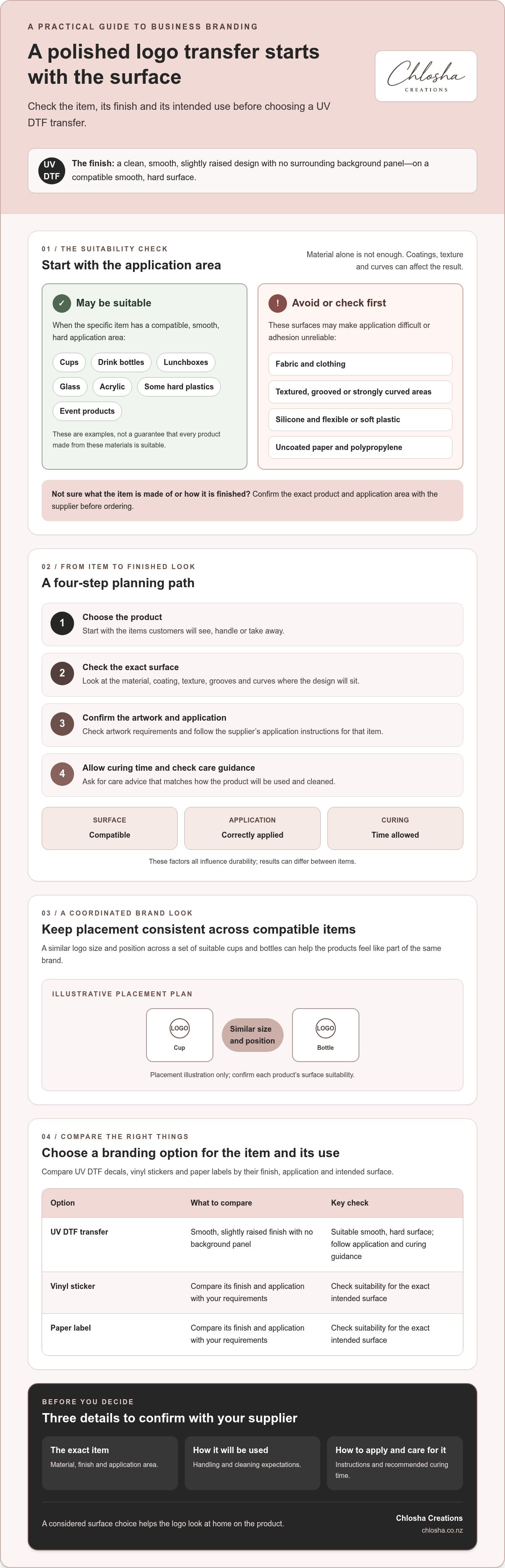
A transfer may suit items such as cups, drink bottles and event products, provided the surface is compatible. It isn’t a universal solution. Texture, grooves, curves and material can affect how well the transfer applies and how it looks over time. UV DTF product decals are for suitable hard surfaces, not garments or fabric labels.
What does a no-background logo transfer look like?
The printed design sits directly on the item, so the artwork is visible without a rectangular or coloured panel around it. Its smooth, slightly raised appearance gives the logo a defined finish while letting the item itself remain part of the overall look. This finish isn’t a promise of permanent or waterproof performance. Durability depends on the surface, correct application and curing time.
Which small-business products could use branding decals?
Start with products customers see, handle or take away. Suitable options may include cups and drink bottles, event items and other smooth, hard surfaces. Check the exact item before settling on a transfer. A product that looks smooth from a distance may have a coating, curve or texture that affects suitability.
Consistent placement can help different items feel like part of the same brand. For example, use a similar logo size and position across a set of compatible cups and bottles. Before choosing, consider how each item will be handled and cleaned, then ask the supplier for application and care guidance relevant to that use.
UV DTF is distinct from garment-focused direct-to-film printing. For background on that separate process, see this overview of the Direct-to-film (DTF) printing process. For hard-surface branding, focus on the intended use and whether the item’s surface is suitable for a UV DTF transfer.
Chlosha Creations offers Business Logo Transfers and custom UV DTF printing for suitable smooth, hard surfaces. To plan a consistent look across business items, start with the products, check their surfaces, then choose a logo treatment that fits.
How UV DTF custom branding transfers work on suitable surfaces
A UV DTF transfer is a printed decal made to apply to a suitable smooth, hard surface. The design remains visible without a surrounding background panel. It’s applied to the item rather than heat-pressed onto fabric. A clean, dry, compatible surface helps the decal adhere and supports its appearance over time.
Before ordering, check the exact product, not just its general material. A bottle’s coating, a lunchbox’s finish or a curve near the application area can affect suitability. Follow the supplier’s application instructions and allow for the recommended curing time. Durability depends on the surface, correct application and curing, so don’t assume every item will perform the same way.
Which surfaces are suitable for UV DTF branding decals?
Examples may include compatible drink bottles and lunchboxes, glass, acrylic and some hard plastics. These examples don’t mean every product made from those materials is suitable. Check that the application area is smooth, clean and dry. If you’re unsure, ask the supplier about the specific item, as its surface finish and material can affect adhesion and the final look.
Which surfaces should businesses avoid?
Don’t choose UV DTF decals for fabric or clothing. Textured or grooved areas can make application difficult, while silicone and flexible or soft plastic may not provide a suitable surface. Avoid uncoated paper and polypropylene, a low-surface-energy plastic that can make adhesion unreliable. If you can’t confirm what the item is made of or how it’s finished, check before ordering rather than relying on appearance alone.
It can help to consider the wider printing context, too. This comparison of digital and screen printing outlines differences between those methods, though it isn’t a guide to UV DTF surface compatibility. For your products, identify the material and finish, then confirm that the intended application area is suitable.
Once you’ve chosen a compatible item, consider its intended use and follow the supplier’s care guidance. If you’re also looking for labels for personal or school gear, explore personalised name labels as a separate option.
Custom branding transfers compared with other branding options
There isn’t one branding method that suits every product. Compare the item’s surface, how it will be used and the finish you want before choosing. This table is a starting point. The exact material and supplier instructions still matter.
| Option | Finish | Typical application context | Things to check |
|---|---|---|---|
| UV DTF decal | Smooth, slightly raised design with a no-background finish. | Suitable smooth, hard surfaces, such as compatible cups, bottles or acrylic items. | Check the actual surface and follow application and care guidance. Not for fabric, flexible materials or textured areas. |
| Vinyl sticker | Appearance varies by product and design; the sticker may include a background or be cut around the artwork. | Uses and suitable surfaces depend on the sticker material and adhesive. | Check the surface compatibility, application instructions and care guidance for the specific sticker. |
| Paper label | Printed information or artwork on a paper face, often with a visible label shape. | May suit packaging or other uses where a paper label fits the product and intended conditions. | Check the label construction and how it’s intended to be applied, handled and cared for. |
When might a no-background UV DTF decal suit a product?
A no-background design may suit a product when you want the logo to sit directly on a compatible smooth, hard surface, without a panel around it. It could work for a visible logo on a suitable cup, bottle or acrylic product. The result depends on the item, its surface and correct application. For more on UV DTF transfers, explore a broader guide to the process.
When should a business consider another labelling option?
Choose another option for fabric, clothing, flexible items or textured surfaces. Chlosha Creations doesn’t sell fabric labels. Paper labels or vinyl stickers may suit some uses, but their materials and care needs vary. Check the supplier’s instructions against the product’s intended use before deciding.
Let the product guide the choice, not a trend. A logo on a glass item and a label on a package have different practical needs. For general printing context, the Specialty Graphic Imaging Association provides an industry resource. It isn’t a substitute for checking a specific product’s surface and supplier guidance.
How to plan, apply and care for custom branding transfers
A tidy result starts before application. Choose the product, check the exact area where the logo will sit, confirm artwork requirements, then apply your custom branding transfers according to their supplied instructions. This helps you catch surface or sizing issues before you begin.
What should a business confirm before ordering?
Have the item details ready so you can check suitability clearly. Note its material, surface finish, available flat application area and intended use. Even a compatible material can have a coating, curve or texture that affects the result.
Confirm current artwork file requirements and ordering details directly with Chlosha Creations before preparing your order. Don’t assume a particular file format, minimum quantity or turnaround time. If the item will be handled often or washed, ask what application and care guidance applies to that use.
How can you apply and care for a transfer?
Work on a clean, dry, smooth hard surface. Follow the instructions supplied with the transfer and take your time positioning it before pressing it down.
- Prepare: Clean the application area thoroughly and let it dry completely. Dust, grease or moisture can interfere with a neat application.
- Position: Line up the transfer carefully. Once it’s in place, press or squeegee firmly across the design so it makes contact with the surface.
- Peel: Remove the carrier slowly at a low angle, following the supplied steps. If the transfer needs help during application, a warm hair dryer on a low setting may be used as directed.
- Allow it to settle: Leave the item unused for around 24 hours before normal use. Wait 72 hours before dishwasher exposure, and only consider this if the item and transfer guidance both allow it.
These timeframes aren’t a promise of dishwasher-safe performance. Durability depends on the item’s surface, correct application, curing time and care. If Chlosha Creations gives product-specific instructions, follow those rather than general advice.
For personal belongings rather than business products, you can also explore personalised name labels for suitable items.
Choosing a custom branding transfer supplier for your business
A helpful supplier should make it easier to check whether a transfer suits the item you have in mind. Before choosing custom branding transfers, look for clear answers about the surface, finish, application and care. A polished result starts with a suitable item and realistic expectations, not just a logo file.
What to check before committing to a branding approach
Share details about the exact product and ask the supplier to confirm whether its surface is suitable. Use this checklist:
- Surface: What material and finish will the transfer be applied to?
- Application area: Is there a smooth, hard area with enough room for the design?
- Intended use: How will the item be handled, cleaned and used?
- Finish and care: What should you expect visually, and what application and care instructions are provided?
- Artwork: What file requirements and ordering details should you confirm?
Check artwork requirements directly with the supplier. Don’t assume graphic design support is included. Confirm what you need to provide before preparing your order.
How Chlosha can support suitable business branding projects
Chlosha Creations is a family-run New Zealand business offering Business Logo Transfers, Cup & Bottle Logo Labels, Event & Market Labels and custom UV DTF printing. For suitable smooth, hard surfaces, the transfers have a clean, smooth, slightly raised finish with no background panel. Suitability depends on the item’s surface, while durability depends on correct application and curing time.
Before deciding, check that the specific product suits the transfer and ask about relevant application and care guidance. This is especially useful if the item will be handled frequently or needs regular cleaning. Confirm current artwork and ordering requirements directly with Chlosha so you know what to prepare.
If you’re also looking for labels for personal belongings, explore the personalised name label range. It’s separate from Chlosha’s business logo options and may suit a different labelling need.
Choose a finish that fits your products
Custom branding transfers can give suitable smooth, hard products a clean logo finish without a surrounding background panel. Choose the item first, check its exact surface and intended use, then follow the supplier’s application and care guidance. Material, correct application and curing time all influence how the transfer holds up.
Chlosha Creations is a family-run New Zealand business serving customers nationwide, with Business Logo Transfers and custom UV DTF printing for suitable surfaces. The transfers have a smooth, slightly raised, no-background finish. Check that your product is compatible before ordering, and confirm current artwork requirements directly with the supplier.
Looking for labels for personal belongings instead? Explore personalised labels for everyday items. They’re a separate option from business logo transfers, so you can choose what best suits each need.
Planning ahead helps you create a tidy, consistent look with fewer surprises. Explore Chlosha Creations’ Business Logo Transfers and custom UV DTF printing, and check your product’s surface before choosing a transfer.
Frequently Asked Questions
What are custom branding transfers?
Custom branding transfers are printed designs applied to suitable items to display a business logo or other artwork. Chlosha’s UV DTF transfers have a smooth, slightly raised, no-background finish for suitable smooth, hard surfaces. The result depends on the item, surface preparation and application. They aren’t fabric labels or iron-on transfers, so check the product material and finish before ordering.
Are UV DTF transfers the same as vinyl stickers?
No. They’re different types of printed decal, and their finishes and suitable applications can vary. Chlosha’s UV DTF transfers have a smooth, slightly raised, no-background finish for suitable hard surfaces. Vinyl stickers may suit other applications, depending on their material and the product surface. Compare each option with your item, intended use and care needs rather than assuming one type is right for every business.
What surfaces can custom UV DTF branding transfers go on?
They’re intended for suitable clean, dry, smooth, hard surfaces. Examples may include compatible drink bottles, lunchboxes, hard plastic, glass and acrylic. Check the exact item, as its material and surface finish affect suitability. Avoid textured or grooved areas, silicone, flexible or soft plastic, uncoated paper and polypropylene. If you’re unsure what the item is made of or how it’s finished, confirm compatibility before ordering or applying the transfer.
Can I use UV DTF branding transfers on clothing or fabric?
No. Chlosha’s UV DTF decals are for suitable smooth, hard surfaces, not clothing or fabric. They aren’t iron-on, sew-on or woven labels. If your business needs garment branding, look for a product made specifically for fabric and follow that supplier’s application and care instructions. Choosing a product designed for the material helps avoid expecting a hard-surface decal to perform like a clothing label.
Are custom branding transfers dishwasher-safe?
Don’t assume every transfer or item is suitable for dishwasher use. Durability depends on the surface, correct application and curing time, and dishwasher exposure is appropriate only when the product guidance allows it. Chlosha’s care guidance says to wait around 72 hours before dishwasher exposure where appropriate. Check the instructions for both the item and transfer, and don’t treat that wait time as a universal dishwasher-safe guarantee.
How do I apply a UV DTF branding transfer?
Start with a clean, dry, smooth, hard surface. Position the transfer, press or squeegee it firmly, then peel the carrier back at a low angle, following the supplied instructions. A warm hair dryer on a low setting may help if needed. Allow around 24 hours before normal use. Surface suitability and careful application both affect the final result, so check the guidance provided for your transfer.
Does Chlosha design custom business logos?
Chlosha offers custom UV DTF printing for suitable applications, including Business Logo Transfers and other business branding products. Graphic design isn’t a listed service, so don’t assume a logo will be created or artwork edited as part of an order. Before preparing or submitting a design, confirm the current artwork requirements and ordering process directly with Chlosha. This helps you understand what to provide for your chosen transfer.
