

How to Care for UV DTF Transfers When Washing and Drying
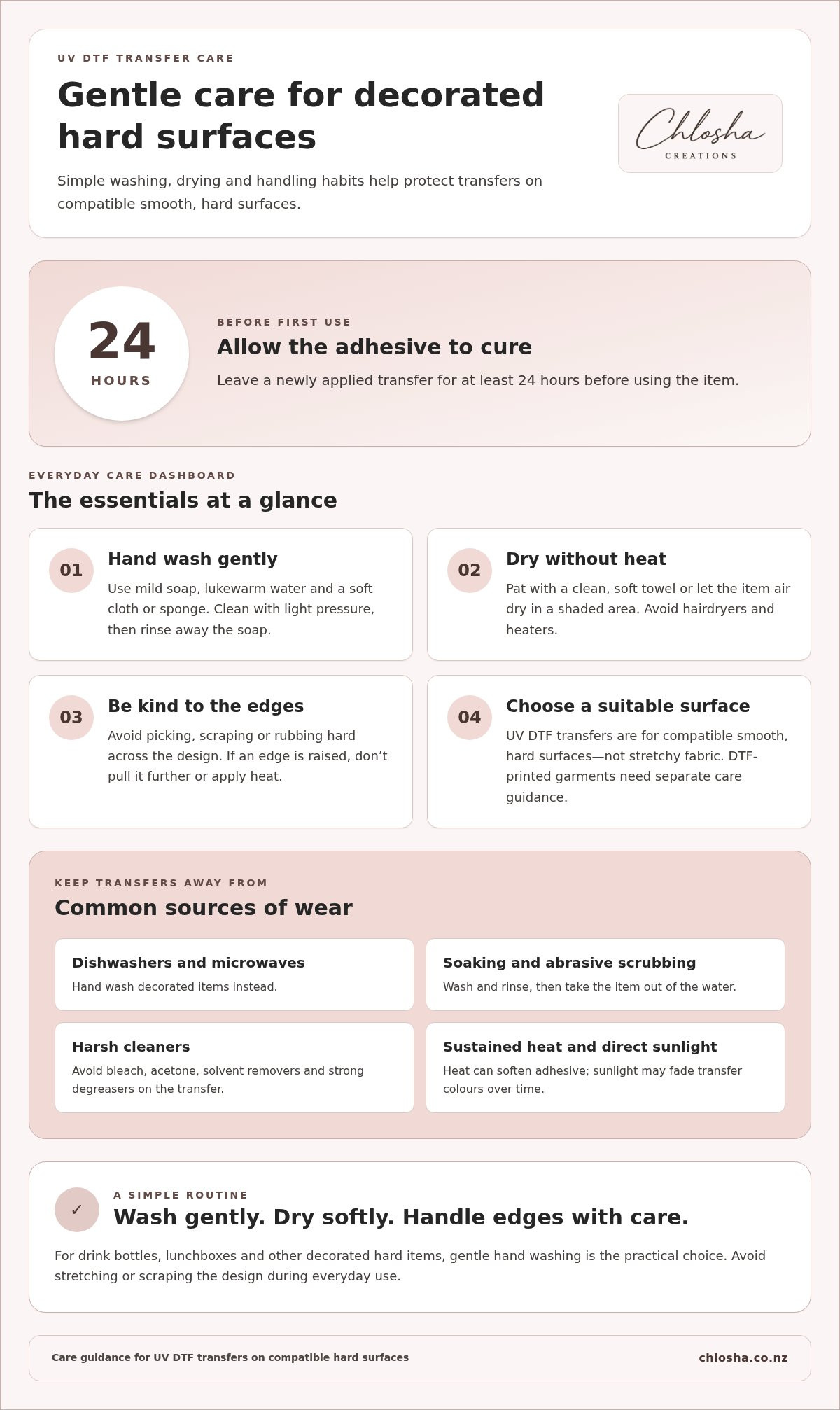
Good UV DTF transfer care instructions start with gentle hand washing: use mild soap and a soft cloth, and avoid soaking, abrasive scrubbing and harsh chemicals. UV DTF transfers bond to hard surfaces with adhesive, so they need different care from a print on fabric. Give a newly applied transfer at least 24 hours for the adhesive to cure before using the item.
Decorated drink bottles and lunchboxes may need gentler cleaning than undecorated items. A little extra care helps protect the transfer from heat, friction and lifting edges. These UV DTF transfer care instructions explain how to wash and dry decorated items, what to avoid, and how to handle them in everyday family life.
UV DTF transfers are designed for suitable smooth, hard surfaces, not stretchy fabric. Hand washing is recommended for the longest life. Gentle cleaning and keeping designs away from direct heat are simple steps to follow at home.
Key Takeaways
- Hand wash decorated items with mild soap and a soft cloth, and avoid soaking or abrasive scrubbing.
- Let a newly applied transfer cure for at least 24 hours before using the item.
- Keep UV DTF designs away from dishwashers, microwaves, sustained heat and harsh chemicals.
- Air dry items naturally where possible, and handle transfer edges gently to help prevent lifting.
- Choose smooth, compatible hard surfaces and avoid stretching or scraping the design during everyday use.
Hand-washing and avoiding soaking or scrubbing
In New Zealand, the same care applies: hand wash decorated hard-surface items gently. Limiting soaking, abrasion and harsh cleaning helps protect adhesion, especially around transfer edges.
Follow these steps for drinkware and other decorated items. UV DTF transfers are for compatible hard surfaces, not fabric. DTF-printed garments use a different process, so their washing guidance is separate.
-
Wash Decorated Items Gently
Hand wash decorated drinkware with mild soap, lukewarm water and a soft cloth or sponge. Clean the rest of a bottle or cup with light pressure, taking care not to rub hard across the design or its edges. Rinse away the soap, then dry the item with a soft towel or let it air dry.
For lunchboxes and other hard items, gently wipe the transfer instead of scrubbing at stuck-on marks. Keep the design away from abrasive pads and rough brushes. Hand washing is the practical choice for decorated drinkware; don’t put UV DTF items in the dishwasher.
-
Use Cold Water and Gentle Cycles
For DTF-printed garments, use cold water at 30°C (86°F) or lower, and turn the garment inside out before washing. Choose a gentle cycle, and avoid heavy-duty settings or long spin programmes that add friction. Wash with similar colours to help reduce dye transfer.
Keep garments away from zips and sharp objects that could catch the print. Skip bleach and fabric softener, and use a mesh laundry bag for extra protection if you have one. These garment-care steps apply to DTF prints on fabric, not UV DTF transfers on hard drink bottles or lunchboxes.
-
Avoid Soaking and Scrubbing
Wash and rinse an item, then take it out of the water rather than leaving it to soak. Prolonged immersion can affect adhesion at the transfer edges, especially if an edge is already lifting. To remove a mark from a decorated drink bottle, dab gently with a soft sponge and mild soap instead of using a scourer.
Don’t pick at the design or scrape residue from its edge with a fingernail. If a mark remains, repeat a gentle wipe rather than pressing harder or reaching for a harsh cleaner. These simple washing habits help limit everyday wear and support lasting adhesion.
What about heat exposure?
Keep decorated hard-surface items away from sustained heat, direct sunlight and harsh chemicals. Heat can soften adhesive, while sunlight may fade transfer colours over time. These steps also help prevent scratches and lifting edges during everyday use.
- Keep transfers away from appliances and hot surfaces. Don’t put UV DTF-decorated items in a dishwasher or microwave. Avoid leaving a decorated drink bottle beside a hot hob, heater or other sustained heat source. High temperatures can soften the adhesive and affect how firmly the design holds. Hand wash the item instead, and let it cool naturally if it becomes warm.
- Choose gentle cleaning products. Don’t apply bleach, acetone, solvent removers or strong degreasers directly to a transfer. These chemicals can affect the design or its bond with the surface. For example, clean a lunchbox with mild soap and a soft cloth rather than spraying a heavy-duty cleaner onto the printed area. Rinse away the soap without scrubbing at the edges.
- Limit prolonged sunlight and weather exposure. Store a decorated bottle or lunchbox out of direct sunlight when it’s not in use. Sunlight can fade transfer colours over time, while outdoor exposure combines sun, rain and changing temperatures. If you’re considering a decal for an item kept outdoors, try it on a representative surface and observe how that item holds up before relying on it for extended exposure.
- Protect edges from scratches and lifting. Don’t pick at a transfer with a fingernail, scrape it with a knife or drag an abrasive tool across it. These actions can catch an edge and encourage lifting. If you notice a raised section, avoid pulling it further or applying heat to press it down. Clean around it carefully with a soft cloth and light pressure.
- Keep irons away from UV DTF designs. UV DTF transfers are for compatible hard surfaces, not fabric or stretchy garments. For a separate DTF-printed garment, follow its care instructions: iron inside out on low, without steam or direct contact with the iron. A clean pressing cloth can protect nearby fabric, but it doesn’t make ironing over the print safe. Keep the iron clear of the printed area as you smooth the rest of the garment.
Air drying and tumble-dryer precautions
Air-dry DTF-printed garments naturally and keep them away from direct heat and prolonged sunlight. UV DTF transfers are used on hard surfaces, so dry a washed bottle or lunchbox with a soft towel or let it air dry. The right method depends on the item, not just the print.
- Air dry fabric DTF prints in the shade. After washing a printed T-shirt, hang it in a shaded, well-ventilated spot. Keep it clear of heaters, heated towel rails and direct sunlight. These steps reduce heat exposure and rubbing against other laundry. Bring the garment in once it’s fully dry, rather than leaving it outside for an extended period.
- Dry decorated hard items without heat. After hand washing a drink bottle or lunchbox, shake off excess water and pat the surface with a clean, soft towel. Take care around the transfer, but don’t rub it firmly. You can also place the item on a drying rack in a shaded area. Avoid using a hairdryer or setting the item beside a heater.
- Select a gentle dryer setting only when needed. Air drying is the preferred option for garments with DTF prints. If the garment care label allows tumble drying, choose the lowest suitable heat setting. Remove the garment promptly once dry, and avoid tumbling it longer than necessary. The care label matters because fabric and construction affect suitable drying methods.
- Keep new transfers dry during curing. A freshly applied UV DTF design needs at least 24 hours for its adhesive to cure before the item is used. During that time, keep the item away from washing, splashes and damp drying racks. Don’t use heat to speed up the process. After curing, gentle washing and careful drying help avoid unnecessary stress on the transfer.
- Store printed garments only when fully dry. Check seams, collars and the area around the print before putting a garment away. Damp fabric folded against itself can trap moisture, so wait until the whole item is dry. Fold it with the print facing out, then store it in a cool, dry place away from prolonged sunlight. This helps protect the colours between wears.
Avoiding abrasion and stretching
- Handle the item by its undecorated areas. When carrying a drink bottle, hold the neck or base instead of rubbing your palm across the transfer. Lift a lunchbox by its handle rather than dragging it across a rough bench. Repeated friction can wear the design, while a snag may catch an edge. Small changes to how you pick up and put down an item reduce unnecessary contact.
- Use light pressure when cleaning around the design. Choose a soft sponge or cloth and wipe the transfer gently rather than scrubbing back and forth. If dried food is beside a lunchbox decal, clean the surrounding hard surface first. Work towards the mark without dragging a rough cloth over the design. Avoid fingernails, scourers and stiff brushes, which can scratch the finish or catch an adhesive edge.
- Keep UV DTF designs on rigid surfaces. These transfers suit compatible hard items, not fabric or stretchy textiles. Don’t apply one to a T-shirt, flexible bag or surface that bends and stretches during use. Movement can stress the design and its adhesive. Clothing prints use a different process, standard DTF, with garment-specific washing and handling needs.
- Take extra care with curved items. A drink bottle or rounded container can be harder to grip without touching its design. Hold the item at the top and bottom while opening a lid, and avoid twisting against a transfer that wraps around the surface. If the lid feels tight, steady the undecorated area. This helps prevent fingers or knuckles from repeatedly rubbing the design.
- Apply transfers without pulling or forcing the design. Start at one edge on a curved item and press the transfer down progressively, rather than stretching it around the curve. Once applied, peel the carrier slowly at a low angle. If a small section lifts, press it back down carefully instead of tugging at it. Allow the adhesive to settle before handling the item roughly or putting it into regular use.
Don’t pick at the edges of an applied UV DTF design or scratch along them during routine handling and care.
What common problems cause UV DTF transfers to peel, crack, or fade?
- Match the transfer to a suitable surface. UV DTF adhesion depends on a clean, dry, smooth and compatible surface. Glass, acrylic, metal, ceramic and suitable rigid plastics are examples. Avoid textured, grooved, silicone, flexible or soft plastic, rubber and uncoated paper, where reliable contact may be harder to achieve. Choose a smooth, rigid area instead.
- Prepare the surface before applying. Dust, oil and moisture can interfere with the adhesive bond. Clean the intended area, then let it dry fully before positioning the transfer. For example, fingerprints on a drink bottle can leave residue even when the surface looks clear. Avoid touching the prepared area before application, and press the design down evenly so trapped air doesn’t interrupt contact.
- Allow the adhesive time to settle. Using or washing an item too soon can put stress on a fresh transfer. Leave at least 24 hours after application before using the item, giving the adhesive time to cure. During that period, don’t soak the bottle, scrape at the design or put it through a wash. Gentle handling helps avoid lifting while the bond settles.
- Reduce friction and edge damage. Repeated scrubbing, scratching or picking can catch a transfer edge and encourage peeling. Hand wash with a soft cloth, and avoid abrasive pads on a lunchbox or bottle. Dishwashers, microwaves and harsh cleaners can expose a design to conditions that affect its adhesion or appearance. Hand washing helps limit these stresses, but the surface, application and ongoing use also matter.
- Limit prolonged sunlight and weather exposure. Direct sunlight can fade transfer colours over time. Rain, sun and repeated heat cycles can also affect graphics left outdoors. Keep a decorated item out of direct sunlight when practical, such as storing it in a cupboard rather than on a sunny windowsill. For an outdoor use, assess the particular surface and conditions instead of assuming every finish will behave alike.
Sun exposure is an ongoing care concern. Prolonged direct sunlight may fade UV DTF transfer colours over time, so consider where an item is stored as well as where it is used. When possible, store it indoors or in a shaded place rather than in direct sunlight. This routine can help limit exposure without changing the design or how it was applied.
For items used outdoors, move them out of direct sunlight when practical, and avoid choosing a regular resting place that keeps the transfer exposed for long periods. The aim is to keep the item away from direct sun where possible, not to assume that a transfer will remain unchanged in every setting. Placement is one part of care, alongside choosing a compatible surface, applying the design carefully and handling the finished item gently. Paying attention to these habits helps reduce avoidable stress on the transfer and its appearance over time.
Chlosha Creations: Personalised Name Labels
Chlosha Creations makes personalised name labels to help identify everyday items. They’re a practical option for school, daycare and kindy belongings that can otherwise get mixed up, such as lunchboxes, drink bottles and stationery.
Choose Personalised Name Labels for a clear name, or Personalised Icon + Name Labels to add a visual cue. Kids Name Labels and School Name Labels suit families organising belongings for the school day. For items with UV DTF transfers, keep following the care steps above; these labels serve a different identification need.
Explore the personalised name labels range, or contact Chlosha Creations if you’d like help choosing an option for your family.
Make thoughtful care part of your routine
Choose a care routine that suits the item’s everyday use. Keeping these UV DTF transfer care instructions handy helps everyone in the household clean and handle decorated belongings correctly. A quick reminder beside the sink or in a family care note can make those habits easier to remember, especially when children help pack and unpack their bags.
For school, daycare and kindy, clear identification can also make belongings easier to sort when several items look alike. Chlosha Creations offers personalised options for names and icons, helping families identify everyday essentials. Explore personalised name labels for a practical next step, and keep building simple routines that work for your household.
Frequently Asked Questions
What is UV DTF, and why is care different?
UV DTF transfers are printed onto film and cured under UV light before being applied to compatible hard surfaces. They are peel-and-apply, with no heat press required. Care is about protecting the bond between the transfer and the item, not preventing a garment print from stretching with clothing. Suitable surfaces include smooth glass, acrylic, metal, ceramic and rigid plastic.
Does the cure time actually matter after application?
Yes. The adhesive needs time to settle against the receiving surface after you apply the design. Using the item heavily too soon can disturb that new bond before it has had time to cure. For instance, wait before putting a freshly decorated bottle into a packed school bag, where other items may knock against its surface. Give the transfer time to set before returning the item to regular use.
How should UV DTF items be washed?
Hand wash with mild soap and a soft cloth or sponge. Gently wipe the transfer itself, and use another part of the cloth to clean other areas of the bottle or container. Avoid abrasive pads and cleaners such as acetone or strong degreasers. After rinsing, dry the item carefully so the towel doesn’t snag on a raised edge.
Is UV DTF actually dishwasher safe?
Don’t rely on dishwasher use for a UV DTF-decorated item. A dishwasher combines heat, water and repeated movement, and performance may vary with the surface, application and ongoing washing conditions. Hand washing is the recommended way to care for the decoration. This applies to a drink bottle or lunchbox even if its base material is normally suitable for dishwasher cleaning.
What are the recommended care instructions for UV DTF transfers?
Use transfers only on suitable smooth, hard surfaces, and keep them away from fabric, silicone, rubber, soft plastics and heavily textured finishes. After application, avoid handling that catches or pulls at the design. Keep the item out of prolonged direct sunlight where practical, as exposure can affect colour over time. These details help when choosing where to place a design on an item with different surfaces.
How long should a UV DTF transfer cure before use or washing?
Allow at least 24 hours after application before normal use or heavy washing. For an item intended for dishwasher exposure, the provided product guidance specifies waiting at least 72 hours before its first wash. That waiting period doesn’t make dishwasher use the preferred care method; hand washing is recommended. Keep the item undisturbed while the adhesive settles, rather than speeding the process with heat.
Can UV DTF transfers be washed in a dishwasher?
Hand washing is recommended, not dishwasher washing. The distinction matters because a transfer’s adhesion depends partly on the receiving surface and the way it was applied, while repeated dishwasher conditions add further stress. A smooth glass item and a coated metal item may not behave identically. For everyday drinkware, choose a hand-wash routine rather than treating the transfer as dishwasher-proof.
Can UV DTF transfers be applied to items that will contact food or drinks?
Keep the transfer on the outside of an item, away from food-contact surfaces, the inside of a drinking vessel and areas routinely touched by lips. For example, place a design on the outer wall of a bottle, not inside the rim or where someone drinks. This keeps the decoration separate from parts that directly contact food, drink or a person’s mouth.
