

Waterproof Sports Gear Labels for Kids’ Equipment
The right label for a swim bag may not be the right choice for a helmet or paddle. Waterproof sports gear labels need to suit the item’s surface and the kind of use it gets, so choosing by appearance alone can lead to a poor fit.
It’s frustrating when kids’ gear gets mixed up, especially after training or a day around the water. A clear name label makes equipment easier to identify, but the surface, water exposure and regular handling all matter when choosing one.
This guide covers what to consider for water sports gear, helmets, paddles and other kit. You’ll learn how surface preparation affects application, which details to provide when choosing personalised labels, and how to match a label to each item. The aim is to help you organise your child’s gear with practical use in mind.
Key Takeaways
- Clean, dry surfaces help labels apply properly, so surface preparation is an important part of professional application.
- Choose labels with the item and its water exposure in mind, especially for swim gear and equipment used around the water.
- Consider the shape and finish of helmets, paddles and other hard gear when selecting a suitable label.
- Learn what to consider about label materials and adhesives, and why durability depends on more than the label alone.
- Explore personalised sports and gear name labels for a clear, individual way to identify kids’ equipment.
How professionals apply labels to clean, dry surfaces
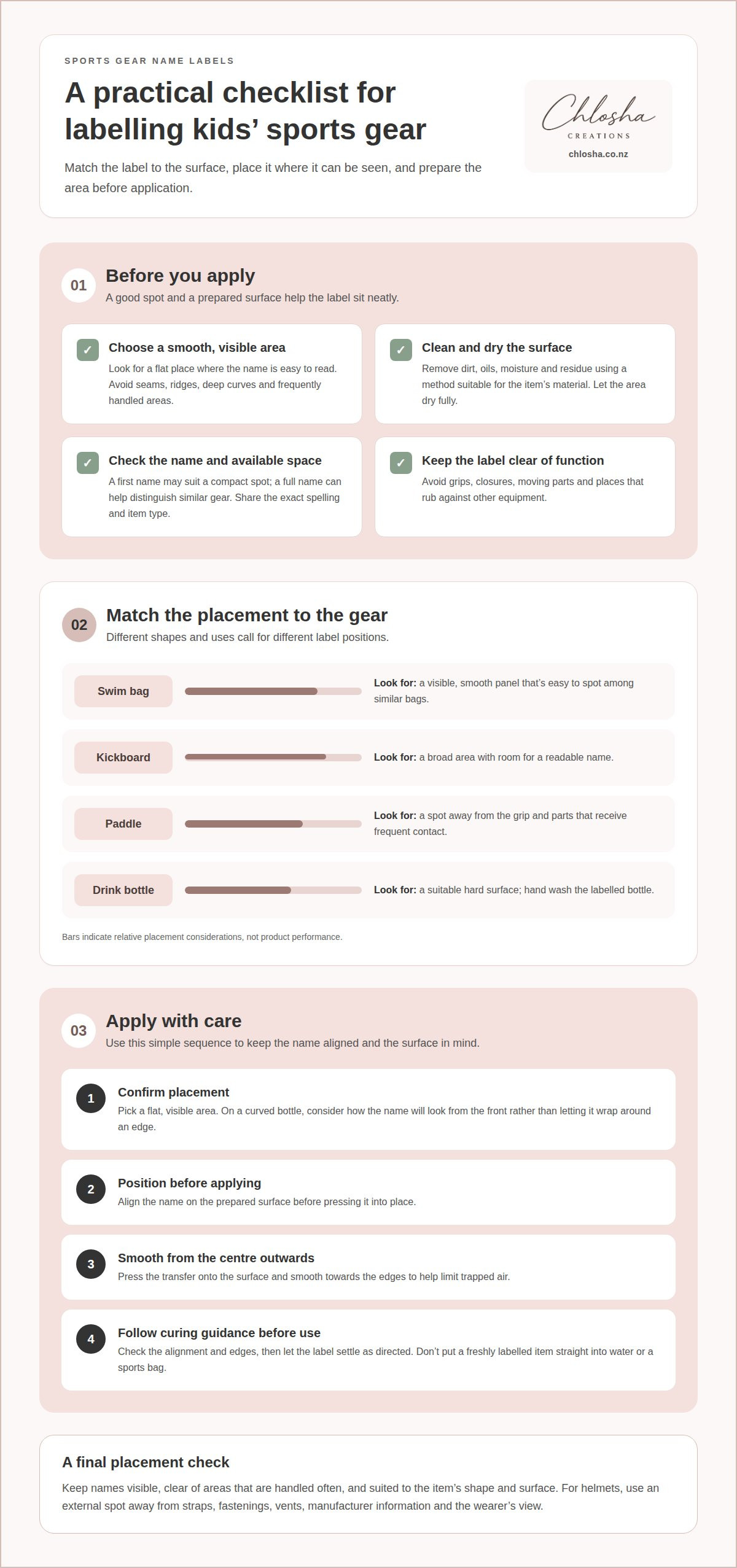
Start with the item and its surface. A smooth drink bottle, curved helmet and textured paddle handle each offer different places for a label. Choose a smooth, accessible spot where the name will be easy to read and won’t cross seams, ridges or areas that are handled often.
Preparation matters because dust, moisture and residue can interfere with contact. A professional cleans the selected area using a method suitable for that item’s material, then allows it to dry fully. For example, a damp patch on a swim bag tag or sunscreen residue on a bottle can affect the application surface.
- Confirm the placement. The professional identifies a flat, visible area, such as the side of a bottle or a clear section of a helmet shell. They avoid edges and deep curves where a label may not sit evenly.
- Prepare the surface. Dirt, oils and moisture are removed from the chosen spot. A paddle used outdoors may need more attention to surface grime than a clean, newly purchased piece of equipment.
- Position the name. The label is aligned before application. On a curved drink bottle, the professional considers how the name will look from the front, rather than letting it wrap around an edge.
- Apply and smooth. The transfer is placed carefully and pressed onto the prepared surface. Smoothing from the centre towards the edges helps limit trapped air and keeps the design sitting neatly.
The item’s shape also affects placement. A broad, flat section on a kickboard differs from the rounded crown of a child’s helmet. A shorter name may fit more neatly on a narrow paddle blade than a long line of text. Keep labels clear of grips and moving parts.
Names should be legible at the size available. A first name may suit a compact area, while a full name can help distinguish similar gear at a school sports day. A small icon beside the name can also help younger children recognise their own equipment. For personalised name labels, the name and intended item help guide the choice.
After application, check the alignment and edges, then follow the product’s curing guidance before using the item. Don’t put a freshly labelled item straight into water or a sports bag. Early handling can disturb a new application, especially when gear moves between swimming lessons, training and home.
Good preparation helps, but the surface remains important. A clean, dry, smooth area is a more suitable base than a damp, dusty or textured patch. Choose a spot that follows the item’s shape and keeps the name visible across your child’s sports kit.
Label recommendations for water sports
For waterproof sports gear labels, match the label to the item’s surface and use. Gear carried beside a pool faces different conditions from equipment used underwater. A swim bag may get splashed, while a paddle can encounter water and frequent handling.
First consider where the name will be seen and what that spot encounters. A bag panel may have room for a clear name, while a narrow bottle or paddle shaft may suit a smaller design. Keep names away from closures, grips and areas that rub against other equipment. Waterproof sports gear labels are not automatically suitable for every surface or level of water exposure.
- Swim bags: A visible, smooth panel can make the name easier to find among similar bags.
- Kickboards: A broad area gives more room for a readable name without crowding the equipment.
- Paddles: Keep identification away from the grip and parts that receive frequent contact.
- Drink bottles: Choose a suitable hard surface and hand wash the bottle to care for its label.
How much do custom waterproof sports gear labels cost in New Zealand? The cost depends on the label size, quantity and design requirements. The item type and the names needed help determine what kind of label will suit the job, rather than relying on a general price estimate.
Can waterproof labels be removed without leaving residue or damaging gear? Removal depends on the label and the item’s surface. A hard plastic bottle may respond differently from coated or textured equipment. Avoid forceful scraping, which can mark a surface, and take care with delicate finishes.
What information should you provide for a sports gear identification label? Give the exact spelling of each name, the item type and any preferred icon or design details. Include the surface and likely placement. A paddle blade, for example, has different space and handling considerations from a bottle.
Are waterproof labels safe for children’s sports gear and skin contact? Apply labels to equipment surfaces, not skin. Keep them away from areas that touch a child, such as the inside of a helmet or a goggle strap. On a helmet, choose an external spot that doesn’t affect its fit or function.
For gear used around pools or beaches, follow the application guidance and let the label settle as directed before use. Hand wash labelled drink bottles. If you’re organising several larger items, explore name labels for larger gear as one option.
Labels for helmets, paddles, and other hard surfaces
Hard equipment comes in many shapes, so placement needs to suit the surface. A bicycle helmet has a curved shell, while a paddle blade offers a broader area. Scooter decks, lunchbox lids and plastic gear tubs have their own textures and edges. Look for a smooth, visible spot away from moving parts and areas that receive constant contact.
On helmets, place identification on the outside, away from straps, fastenings and the wearer’s view. Don’t cover manufacturer information, vents or damaged areas. A compact name may sit more evenly on a curved shell than a large design. Follow the helmet’s care and use instructions when choosing a spot.
A paddle calls for different placement. A name near the centre of a broad blade can be easier to see than one near the edge. The narrower shaft is handled often, so a small, legible design may work better there. On a child’s scooter, consider a visible section of the deck or frame that’s clear of foot placement and moving parts.
Other hard-surface examples include plastic drink bottles, racket frames, storage tubs and bike helmets. Their finishes can vary: a smooth, clean panel differs from a textured grip or a deeply curved edge. That variation affects how well a label sits and how easy the name is to read. A professional can assess the intended item and suggest a placement that fits its shape.
- Helmet: Choose an outer area that leaves straps, vents and existing information clear.
- Paddle: Use a visible section away from the grip and blade edge.
- Scooter: Avoid the standing area, wheels and folding parts.
- Racket: Consider a flat section of the frame, not the grip surface.
- Gear tub: Put the name where it remains visible when the tub is stacked.
Contrast helps children recognise their equipment. A clear colour against the item’s surface may stand out better than fine decorative details. On a dark helmet, for example, strong contrast can make a short name easier to spot. An icon-and-name design can also help children recognise a familiar symbol quickly.
Surface condition still matters. Dust, moisture and rough patches can affect application, while frequent rubbing may wear a label over time. For equipment used at school or training, balance visibility with how the item is carried, stored and handled. A good position makes identification useful without getting in the way.
Waterproof labels for sports equipment
The phrase waterproof sports gear labels can refer to products made from different materials and designed for different uses. For children’s equipment, choose according to the item’s surface and care routine, not the label description alone.
Label materials and adhesives
A label’s visible layer carries the name or icon, while its adhesive bonds it to the item. Both need to suit the surface. Chlosha Creations’ UV DTF transfers are designed for suitable smooth, hard surfaces and have a clean, no-background finish. They are not fabric labels, so a fabric swim bag needs a different identification option.
For a plastic bottle, check that the surface is smooth and suitable for application. A ridged lid, flexible surface or rubber grip differs from a smooth bottle body. Moisture, grime and residue can interfere with adhesion. A broad waterproof claim doesn’t mean one label works equally well on every sports item.
Washing and outdoor-use lifespan
How long do waterproof sports gear labels last through washing and outdoor use? There’s no single lifespan for every item. Surface type, application, curing time, washing conditions and ongoing use all affect durability. Repeated rubbing on a paddle shaft, for example, creates different wear from a name on a gear case.
For UV DTF labels, allow at least 24 hours before washing or heavy use. Wait 72 hours before dishwasher exposure where appropriate, and hand washing is recommended for longest life. A child’s drink bottle washed by hand has a different routine from one placed in a dishwasher, so follow the care guidance for the label and item.
Water exposure varies, too. A damp kit bag, a bottle rinsed after training and gear used in salt water face different conditions. Don’t assume a water-resistant label is suitable for prolonged submersion or every water sport. Check the item’s material and intended use, then consider where the label will receive the least rubbing.
- Surface: Match the label to a suitable smooth, hard area, not a flexible or textured one.
- Application: Follow the label’s instructions and allow the stated curing time.
- Care: Hand wash labelled drink bottles, avoiding harsh scrubbing over the design.
- Use: Consider water exposure, outdoor conditions and regular contact with other gear.
A label’s lifespan depends on more than its material or adhesive. Application, placement and how the equipment is used all contribute. On a helmet, bottle or paddle, choose a compatible area away from frequent contact, then follow the care instructions to help maintain the finish during everyday sports use.
Which materials and adhesives make sports labels waterproof and durable?
A label’s performance comes from its face material, printed design, adhesive and the surface working together. For a child’s drink bottle, the label needs to suit a hard surface and the bottle’s washing routine. A label designed for a smooth bottle differs from one intended for a textured grip, so “waterproof” alone doesn’t describe every use.
The visible layer carries the name or icon and needs to remain legible as the item is handled, stored and cleaned. The adhesive bonds that layer to the equipment. A label designed for smooth plastic may not suit textured rubber or flexible surfaces.
UV DTF transfers suit compatible smooth, hard surfaces such as glass, acrylic, metal, ceramic and smooth plastic. They can provide a clean, smooth, no-background finish. For a helmet, paddle or bottle, the surface shape and finish still matter. A curved area, textured patch or frequently rubbed spot can affect how well a transfer sits and fares during everyday use.
Adhesion depends on contact with the item, not just the material name. A smooth bottle side offers a different bonding area from a ridged lid. Dirt, moisture and oily residue can also interfere. That’s why preparing the surface properly and following the application guidance matter as much as the adhesive.
Think about the equipment’s routine before choosing. A drink bottle washed after school needs care suited to repeated cleaning; a paddle may encounter water and frequent handling. For bottles, hand washing is recommended. Avoid assuming a label is dishwasher-safe, permanently waterproof or suitable for submersion unless its specific guidance says so.
Read the product description for its intended surface and care instructions. If you’re ordering labels for different gear, identify each item clearly, such as a helmet, hard plastic bottle or paddle. This helps you choose according to the actual materials rather than relying on one broad claim for every item.
Durability depends on the label’s construction, surface condition, placement, application and ongoing use. A well-matched label on a clean, smooth area is a more considered choice for a child’s hard sports equipment than choosing on the basis of a waterproof claim alone.
Chlosha Creations: Sports & Gear Name Labels
Chlosha Creations offers Sports & Gear Name Labels for identifying children’s equipment for school, training and weekend activities. Its Personalised Name Labels use UV DTF transfers with a clean, no-background finish for suitable smooth, hard surfaces.
A name or icon can help distinguish a child’s drink bottle, helmet or other gear from similar items. The right option depends on the equipment’s surface and intended placement. These transfers are for suitable hard surfaces, not fabric swimwear or clothing. Hand wash labelled drink bottles.
For a simple name, consider Personalised Name Labels; an icon alongside it can help younger children identify their belongings. Choose an option that fits the item’s surface and share the name details when ordering. Browse Chlosha Creations’ Sports & Gear Name Labels to find a practical option for your child’s kit.
Get your child’s gear ready for the next outing
Before the next school sports day, swimming lesson or weekend paddle, decide which items need clearer identification. Don’t forget the drink bottle or gear bag, which can also get mixed up in a busy changing area. A short name or familiar icon can help children spot their belongings. If you are packing for unpredictable outdoor conditions, having dependable rain protection on hand from Umbrellas.co.za can also keep parents and spectators dry on the sidelines.
Chlosha Creations offers Personalised Name Labels, Personalised Icon + Name Labels and Kids Name Labels for children’s belongings. Match the label to the item’s surface and intended use, and follow the product’s application and care guidance. No label should be assumed suitable for every surface or type of water exposure.
Ready to organise larger pieces of kit? Explore name labels for larger sports gear and choose an option that suits the equipment you need to identify. A thoughtful label can help make pack-up easier and give your child’s gear a personal touch.
Frequently Asked Questions
What types of waterproof labels are available for sports gear?
For sports gear, consider Personalised Name Labels, Personalised Icon + Name Labels or UV DTF transfers. A name-only design keeps things simple, while an icon gives children a visual cue. A familiar symbol on a bottle, for instance, may help a swimmer recognise it before reading the name. Check the product details to confirm whether a label is suitable for the item and how it will be used.
Are waterproof labels suitable for swimming, diving, and saltwater exposure?
Don’t assume a label is suitable for diving, prolonged submersion or saltwater exposure. Consider the item and its use: a label on a poolside gear container has a different role from one on equipment taken underwater. Check the product details before choosing a label for water sports. For gear likely to be submerged or exposed to salt water, choose an identification method designed for that use.
What are the best waterproof labels for sports bottles, helmets, and equipment?
The right option depends on the item and its surface. Check the product details to see whether the label is suitable for that item. On a bottle or helmet, consider the available space so the name stays visible without crossing a seam or curve.
How are waterproof labels applied to sports gear to help them stay attached?
Check the product guidance to confirm whether the label is suitable for the item’s surface. On a helmet, bottle or paddle, choose a spot clear of seams and ridges to give the label an even area of contact. Follow the product’s application guidance for the item.
Where can I buy waterproof sports gear labels in New Zealand?
Chlosha Creations offers sports and gear name labels.
