

Labels for Fishing Gear to Sort Tackle Boxes and Tools
A well-labelled tackle box is quicker to sort and easier to pack. Fishing-themed decal packs vary in size: some contain 50 non-repeating designs or 105 pieces, while a bass-fishing set may have three. For organising gear, choose clear labels that identify what belongs in each compartment or mark tools and equipment at a glance.
Hooks, sinkers, lures and small tools can quickly get mixed together, especially when you’re packing in a hurry. Labels for fishing gear and tackle boxes give each item or storage spot a clear name, helping you find what you need and return it to the right place after a trip.
This guide covers what to label, how to make wording easy to scan, and where labels work best on tackle boxes and equipment. It also shares practical tips for choosing a label style and applying it to a clean, suitable surface, so you can build an organisation system that suits the way you fish.
Key Takeaways
- Give each tackle compartment a clear purpose, such as storing hooks, sinkers or lures, so gear is easier to find and put away.
- Keep label wording short and easy to scan when you’re sorting equipment in a hurry.
- Choose where labels will go based on the item’s surface and how you use or handle it.
- Use a consistent naming system across boxes and tools to make your setup easier to maintain.
- Personalised name or icon-and-name labels can help distinguish gear that belongs to different people.
Labels for fishing gear and tackle boxes
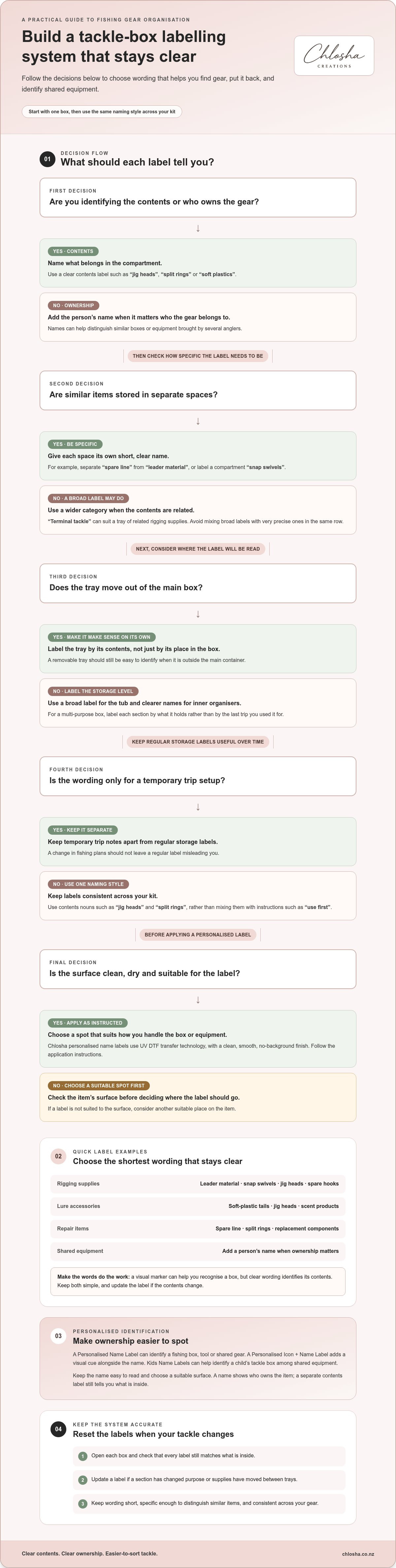
Build your labelling system around how you prepare for a fishing trip. If you sort equipment by fishing method, use labels such as “soft plastics”, “trolling gear” or “bait rigging”. If you sort by item type, name the contents directly. A useful label helps you find something quickly, rather than simply decorating the box.
Choose a consistent level of detail. A broad label such as “terminal tackle” suits a tray of related rigging supplies. A specific label, such as “snap swivels”, is more useful when similar items have separate compartments. For leader material, add the line type or purpose if that helps distinguish it from other spools. Avoid mixing broad categories and very precise labels in the same row.
Match the label to the way gear is stored
Consider how you handle each container before choosing its wording. A removable tray needs a label that still makes sense outside the main box. A storage tub may need a broad contents label, while its inner organiser can identify specific rigging parts. For a multi-purpose box, label each section by its contents rather than the last trip you used it for.
- Rigging supplies: Separate leader material, snap swivels, jig heads and spare hooks when they occupy different spaces.
- Lure accessories: Distinguish soft-plastic tails from the jig heads or scent products stored nearby.
- Repair items: Mark spare line, split rings or replacement components so they’re easy to locate.
- Shared equipment: Add a person’s name where ownership matters, especially when several anglers bring similar boxes.
Short wording is easier to scan, but it still needs to distinguish similar contents. “Line” may be enough if the box holds one type. If it contains spare main line and leader material, label them separately to avoid confusion. Likewise, “spares” can be too broad for a tray containing both replacement components and repair tools. Choose the shortest wording that clearly identifies the contents.
Use the same naming style across your kit. For example, label contents with nouns such as “jig heads” and “split rings”, rather than mixing them with instructions like “use first”. Keep temporary trip notes separate from labels for regular storage. Then, a change in fishing plans won’t leave a permanent label misleading you.
Review labels as your tackle changes
Once your gear is sorted, open each box and check that the labels match the contents. If a section has changed purpose, update its label before packing it away. This simple reset keeps labels accurate, particularly when you move supplies between trays or prepare a different setup.
Labels for fishing gear and tackle boxes can also distinguish equipment that looks alike. Names help show ownership, while a short description identifies the contents. If you want a personalised name for an individual case, browse personalised name labels as one option for identifying your gear.
A visual marker can complement a written label, but it shouldn’t replace wording that identifies the contents. Use a sticker to recognise a box, then keep its contents label clear and specific. If you move trays between containers, check that the visual marker still identifies the right equipment and that the wording remains accurate on its own. For similar supplies, names such as “leader material” and “spare line” are more useful than design alone. Keep decorative choices consistent if they help you scan your kit, while using labels for practical details about contents or ownership.
When choosing a fishing sticker for a tackle box, check the details given for that particular product rather than assuming every sticker has the same features. A set of bass fishing stickers contains 3 pieces. The American Flag Fishing Sticker is described as waterproof and UV resistant. Those details can inform whether a particular sticker suits the way you intend to identify your gear, but the box should still carry a readable contents label. If the contents change, revise the wording even if the sticker remains in place. A distinctive visual mark and an accurate label serve different purposes: one helps you recognise the container, while the other helps you choose the right gear without opening several boxes. Keep both choices simple enough to remain useful as your tackle arrangement changes.
Chlosha Creations: Personalised Name Labels
Chlosha Creations offers Personalised Name Labels for identifying fishing boxes, tools and shared gear. Add a name to make ownership clear, or choose a Personalised Icon + Name Label when a visual cue helps distinguish one person’s equipment. These labels use UV DTF transfer technology, with a clean, smooth, no-background finish. Apply them to a clean, dry, suitable surface and follow the application instructions.
If you’re sorting gear for a family fishing trip, Kids Name Labels can help identify a child’s tackle box among shared equipment. Choose wording that’s easy to read and suits the item’s surface. Explore the personalised name label range for practical options, and visit chlosha.co.nz to find a label style that suits your gear.
Make your next fishing trip easier to organise
Before your next outing, decide which parts of your setup need clear identification. Choose wording that will still make sense if you rearrange your gear, and keep temporary trip notes separate from labels for regular storage. Your system can then adapt without making familiar equipment harder to find.
Well-chosen labels for fishing gear and tackle boxes can make packing more orderly, especially when equipment is shared or moved between containers. Start with one box, see which wording suits your routine, then use the same approach across the rest of your kit.
Ready to personalise your gear? Explore the name label range and choose an option that suits your setup. A thoughtful system can make getting ready for your next trip feel that little bit simpler.
