

Preventing Lost Property at Daycare: What to Send Safely
The simplest way to prevent lost property at daycare is to label everyday belongings clearly and leave valuables or fragile items at home where possible. Pack only what your child needs, make each item easy to identify, and agree with the centre on how special belongings will be stored and returned.
A drink bottle, lunchbox or comfort toy can easily get mixed up during a busy day. Clear names help educators and children identify belongings, while keeping each item in a consistent place makes packing up easier. For treasured or breakable items, leaving them at home is often the practical choice.
This guide covers how to decide what to send, how to handle valuable or fragile belongings, and what families can do to keep track of everyday gear. You’ll also find practical labelling steps and advice on raising repeated concerns, helping make daycare drop-offs and pick-ups more organised.
Key Takeaways
- Label everyday items clearly and give comfort belongings a consistent place in your child’s bag or at the centre.
- Keep treasured, fragile or valuable items at home where possible; agree on safe storage with educators if they need to come in.
- Ask how the centre handles unidentified belongings, where they’re kept and how families can reclaim them.
- Build a simple routine for checking your child’s belongings at pick-up and following up on anything missing.
- If items go missing repeatedly, note what’s been lost and when, then raise the pattern calmly with the centre.
Bringing valuables or fragile items
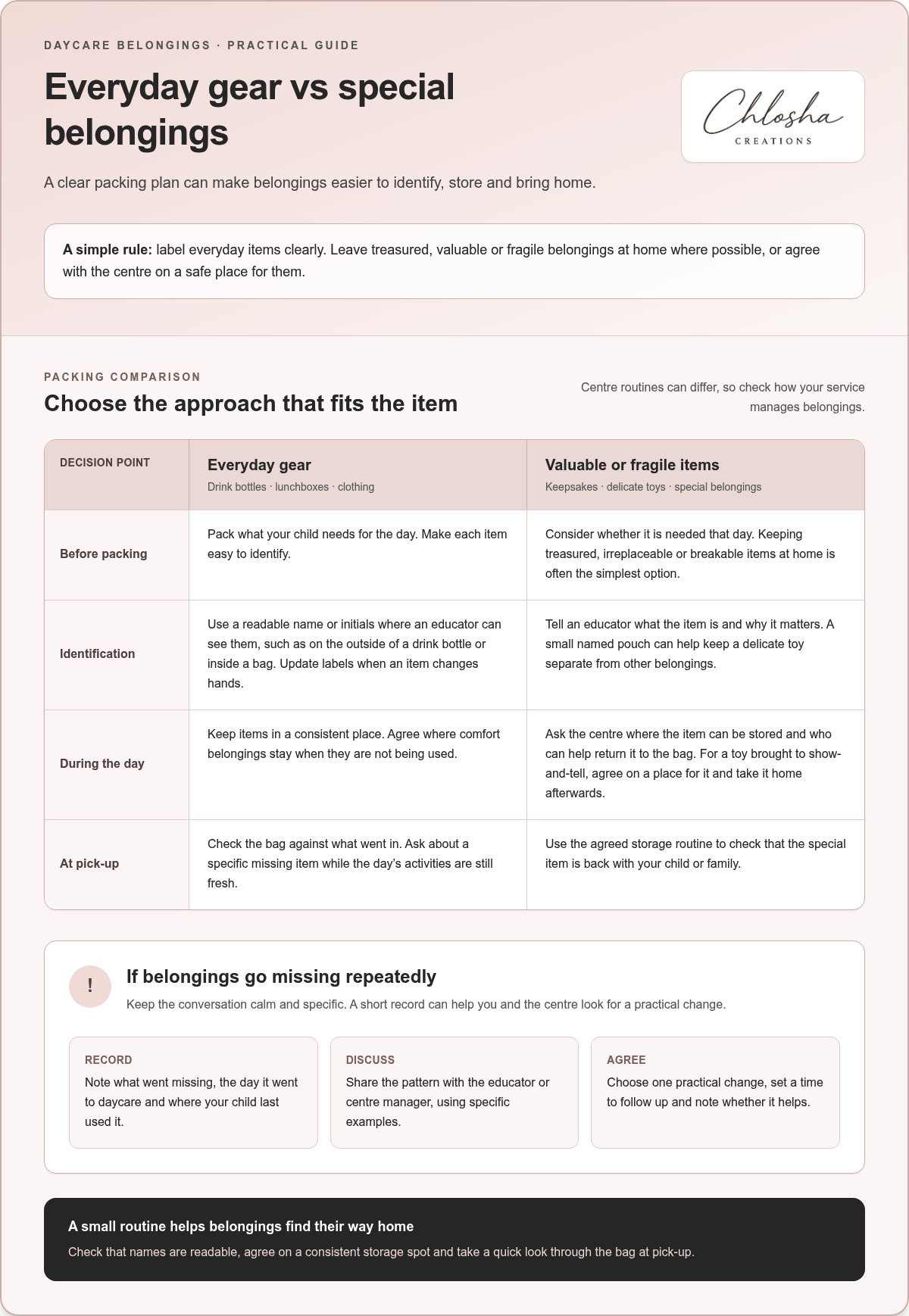
A valuable item may be costly or deeply meaningful to your child or family. A fragile item could break or be damaged during ordinary daycare activities, such as a delicate keepsake or small ornament. Before packing either, consider whether your child needs it that day or can leave it safely at home.
For special, irreplaceable or breakable belongings, keeping them at home is often simplest. Children may want to show a treasured toy to friends, then feel upset if it gets damaged or goes missing. If your child wants to share something special, agree on a short show-and-tell and take the item home afterwards.
If your child is bringing a toy from home, ask whether the centre has a designated place for it. A clearly marked box or shelf keeps personal toys separate from shared equipment and makes them easier to find at pack-up time. For example, an educator could put a named toy in the agreed box after show-and-tell.
Talk with an educator before bringing in an item that needs extra care. Describe it, explain why it matters and say when your child needs it. Agree where it will be stored and who will help return it to the bag. A small named pouch can keep a delicate toy separate from food containers, spare clothes and outdoor gear.
How can daycare staff organise and display lost property effectively? Use one clearly marked storage area and sort items by type, such as clothing, drink bottles and toys. Store fragile or personal belongings safely instead of placing them on open display. Let families know where the area is and how to look through it.
When staff find an item, they can check for a name and return it directly to the child or family. For unidentified belongings, a short description near the storage area can help parents recognise an item without searching through everything. A sunhat with a distinctive coloured brim, for instance, is easier to identify when families know where it was found.
Ask your New Zealand centre how it handles toys from home, valuable belongings and items that could break. Expectations can differ, so learn the routine before packing a special object. If your child needs a comfort item for rest, agree on a consistent storage spot with their educator. This gives the item a clear purpose and place during the day.
For a fragile or irreplaceable item, choose a safer substitute if possible. A soft toy that can be replaced may be more suitable for daycare than a family keepsake. Deciding before you leave home helps protect meaningful belongings and makes it clear to your child what they can bring.
Family responsibility for belongings
Families can help prevent lost property by identifying a child’s belongings and keeping track of what goes to daycare. A shared routine with educators can make handovers clearer.
Checking and returning belongings
A belongings check is a quick comparison of what your child brought and what comes home. Ask the centre how families can access found items and how staff return labelled belongings. At pick-up, check your child’s bag and ask about anything missing while the day’s activities are still fresh. For example, ask about a red cardigan last worn outdoors instead of making a general enquiry about lost clothing.
Before leaving home, check that names or initials are still readable. Put identification where an educator can see it easily, such as on the outside of a drink bottle or inside a bag. For shared family items, make sure the name identifies the child currently using them. Update labels when a sibling’s lunchbox or a hand-me-down jacket enters the daycare routine.
Comfort items also need a clear arrangement. Agree with your child and their educator where a soft toy or security blanket belongs when it isn’t being used. For instance, it could stay in a particular bag pocket outside rest time. A familiar place helps your child pack up and makes it easier to notice if the item hasn’t come home.
Ask the centre how its policy handles belongings left there during the day. Routines can differ, so find out where items are stored, who can help identify them and how families should follow up. Keep the centre’s instructions with your daycare notes. Then you’ll have a clear process if a named jumper or drink bottle goes missing.
Responding to repeated losses
Repeated losses are separate occasions when belongings go missing, rather than one isolated mix-up. Keep a brief record of each item, the day it went to daycare and where your child last used it. Then calmly share the pattern with the educator or centre manager, using specific examples to help narrow down where items may have been left.
Ask about one practical change that could help. If a hat often goes missing after outdoor play, agree on a consistent place for it when children come inside. If lunch gear gets mixed up, discuss how your child’s bag is stored. Set a time to follow up and note whether the change helps.
At home, a short packing list can help your child take part in the routine. Personalised name labels can make everyday items easier to identify, alongside a quick check of the bag at pick-up.
What lost-property policies do New Zealand early childhood centres typically have?
A lost-property policy explains how an early childhood centre handles belongings separated from children. There’s no single process to assume applies at every New Zealand service, so ask your centre how its system works.
Start by finding out where staff put found items and how families can look through them. Ask whether belongings are sorted by type, room or child. For example, a separate container for drink bottles may make a misplaced bottle easier to find than one mixed in with clothing and toys. Also ask which educator or manager can help with a search.
Storage arrangements explain where items are kept and how families can access them. Ask whether the centre has a designated lost-property area, and whether children can reach it or need an educator’s help. A clearly marked shelf or container gives families a place to check at pick-up. Follow the centre’s guidance on its storage routine.
Ask what happens to belongings without a name. A centre might group unidentified clothing together, for example, while returning an item directly if an educator recognises its owner. Find out how to describe a missing item and who should receive the details. Colour, size and the last activity can help staff narrow down a search.
Return arrangements explain how a centre reconnects belongings with families and handles unclaimed items. Ask whether staff contact families when they identify a name and how to claim an item without a label. Don’t assume every service follows the same process or timing. Ask for the centre’s guidance if an item is still missing.
Some centres have expectations about toys or other belongings brought from home. Ask whether children can bring an item for show-and-tell, where it should be kept afterwards and whether anything should stay at home. For example, a centre may have a specific routine for personal toys during group activities. Follow the guidance your child’s service gives families.
At enrolment or your next conversation with an educator, ask where to find the centre’s written guidance. Look for details about storage, family access, identification and collection. If a step isn’t explained, ask who manages lost property and how to report a missing item. Keep this information with your daycare notes so your family has a clear process to follow.
How often should daycare lost property be checked or returned to families?
A lost-property check is a planned review of belongings separated from children. New Zealand centres may organise these checks differently, so ask your service about its routine. The right frequency depends on how belongings are gathered and stored, and how quickly staff can identify their owners.
Families can use pick-up to check for missing items. Compare what comes home with what your child took in, such as a drink bottle, lunchbox or spare top. If something is missing, tell an educator that day and describe its colour, shape or distinctive details. A clear description helps staff search the right room or activity area.
Centre staff can gather misplaced belongings during room resets and transitions between activities. After outdoor play, for example, an educator might collect a stray hat before the group moves inside. Checking for a name helps staff return it directly. If the owner isn’t clear, putting the item in the centre’s designated storage area gives families a consistent place to search.
Ask how often the storage area is reviewed and how the centre handles identified items. A small collection may be easy to check during regular room tidying. A growing collection may need a dedicated review as part of the centre’s routine. The service can explain how its approach fits the way children move between rooms and activities.
Find out how families are told about found items. Ask whether staff pass named belongings to a child’s room, return them at pick-up or contact families directly. For example, if an educator finds a labelled sunhat after outdoor play, knowing the centre’s handover routine tells you when to expect it back.
Ask what happens to items that remain unclaimed. The centre can explain how families access the collection and what staff do when an item has no visible name. Don’t assume New Zealand services follow a set review or collection schedule. The centre’s own process is the useful guide for your family.
If an item hasn’t turned up after your first conversation, follow up with the room educator or manager. Describe it and say where your child last remembers using it. Ask when staff will next check the relevant area, such as the outdoor-play space or lost-property storage. This makes your follow-up specific and gives the centre a practical place to start.
A shared routine works best when everyone knows the next step. Families can report a missing belonging promptly, while educators explain how and when they’ll search for or return found items. Keep the centre’s process in your daycare notes, so another caregiver collecting your child knows where to ask about a missing jacket or lunch container.
What should parents do if their child’s belongings are repeatedly lost at daycare?
Repeated loss means the same child’s belongings go missing on separate occasions, rather than in one isolated mix-up. Keep a simple record, then raise the pattern with the centre and agree on a practical response.
Write down each missing item, the day it went to daycare, when you noticed it was gone and where your child last used it. For example, note “blue sunhat, Monday, last seen after outdoor play”. Record whether it had a name and whether it later turned up. These details help distinguish a lost item from a temporary mix-up between bags or rooms.
Next, speak with your child’s room educator or centre manager. Choose a calm moment at drop-off or pick-up, and explain the pattern using your notes. Be specific: “The named drink bottle has gone missing twice after lunch” gives staff a clear starting point. Ask what happens to found items from that room and how educators can help track it.
Agree on one practical change to try. If a jacket is often left in the outdoor area, ask whether your child can put it in a consistent spot before moving inside. If lunchboxes get mixed up, check how bags are stored and whether a different arrangement could help. Set a time to review the change with the centre instead of relying on a general promise to keep an eye out.
Keep your own routine consistent while the centre responds. Before leaving home, note key items such as a hat, jumper and drink bottle. At pick-up, compare what comes home with your list. A clear name can help educators return a belonging to its owner, but won’t show where or when it went missing.
If the centre’s first response doesn’t address a serious, ongoing concern, raise it with the manager in writing. Include dates and examples, explain the impact on your child and state what response you’re seeking. Keep a copy of your message and any reply. Families can make a complaint through the relevant education complaint pathway if the centre doesn’t address a serious concern in a timely way.
Focus on resolving the issue, not assigning blame. Ask the centre to explain the next step and when you can expect an update. If the item is a comfort toy or particularly important to your child, say so clearly. A shared plan, such as a named storage place and a handover reminder, can make the routine easier for everyone.
For everyday daycare gear, explore personalised name labels to make belongings easier to identify. Pair clear labelling with the centre’s agreed routine, then keep tracking any recurring losses.
Chlosha Creations: Personalised Name Labels
Chlosha Creations offers personalised name labels to help families identify everyday daycare and kindy belongings. Add your child’s name to items such as drink bottles and lunchboxes, making them easier to recognise during busy routines.
Choose Personalised Name Labels for a name on its own, or Personalised Icon + Name Labels if an icon will help your child spot their belongings. Kids Name Labels and School Name Labels provide options for children’s gear across daycare, kindy and school. Chlosha’s UV DTF labels have a clean, smooth, no-background finish. Follow the application and care instructions for the surface you’re labelling.
If clearer identification would help with your family’s everyday packing routine, explore personalised name labels, or visit chlosha.co.nz to see more.
Make the next daycare day easier
Help your child build independence through an age-appropriate routine, such as packing their bag or recognising their name. Give them a simple role in caring for everyday items. Keep the steps relaxed and repeat them at home so the habit feels familiar on daycare mornings.
Preventing lost property at daycare doesn’t mean sending everything perfectly organised. It means creating a clear, manageable system that suits your child and works with the centre’s routines. Start with one change, then build on it as your child grows more confident.
If you’re ready to make everyday belongings easier to identify, explore personalised name labels from Chlosha Creations. A thoughtful label can be a handy part of your family’s daycare routine, helping your child take their next small step towards independence.
Frequently Asked Questions
What are the best ways to prevent lost property at daycare?
Make each item easy to recognise and pack only what your child needs that day. Choose belongings that stand out from common centre items, such as a bright-coloured drink bottle rather than a plain one. Keep a current photo of unfamiliar gear on your phone to help describe it accurately if it goes missing. For shared or hand-me-down items, update the name so educators can identify the current owner.
How should parents label daycare clothes, bottles, lunch boxes and bags in New Zealand?
Match the identification method to the material. For clothing, use a fabric-appropriate method, such as writing on the care label if suitable, and follow its instructions. Apply UV DTF labels only to clean, dry, smooth hard surfaces, such as compatible bottles or lunchboxes, never fabric. Check bags for suitable smooth areas before labelling. Keep names readable and don’t cover care instructions or important product information.
Which name labels work best for daycare clothing and belongings?
No single label type suits every surface. Clothing needs a method designed for fabric, while UV DTF name labels are for suitable smooth, hard items such as compatible drink bottles and lunchboxes. Chlosha Creations’ UV DTF labels aren’t suitable for clothing, silicone or textured surfaces. For hard belongings, choose a readable name and apply it according to the care instructions. Hand wash labelled drink bottles and lunchboxes.
What should be kept out of daycare to reduce lost-property problems?
Leave irreplaceable keepsakes, fragile collectibles and costly items at home unless your child needs one for a specific reason. A treasured ornament or special toy brought just for show-and-tell, for example, could be damaged or misplaced during play. If your child needs a comfort item, discuss its use and storage with educators first. Check the centre’s guidance before packing toys or electronic items, as expectations can differ.
